When you order 5,000 products from a factory in China, inspecting every single unit before shipment is usually impractical.
So how can you determine whether the overall batch meets an acceptable quality standard without checking all 5,000 pieces?
One of the most widely used approaches in product inspection is AQL — Acceptable Quality Limit.
AQL provides a structured sampling method for deciding how many units should be inspected and how many defects can be tolerated before a shipment is accepted or rejected.
For importers, understanding the basics of AQL is important because receiving an inspection report that simply says “PASS” or “FAIL” means very little if you do not understand how that conclusion was reached.
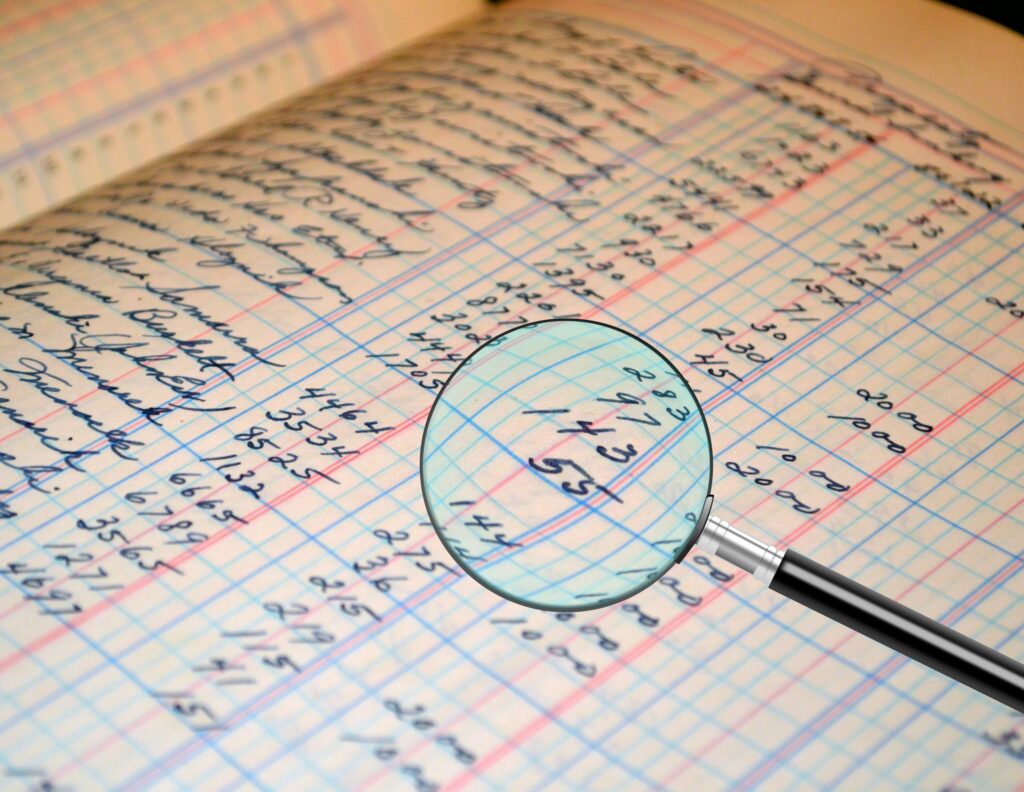
What Does AQL Mean?
AQL stands for Acceptable Quality Limit.
In practical terms, an AQL inspection does not require inspectors to examine every unit in an order. Instead, a statistically determined sample is selected from the production lot and inspected.
The result of that sample is then used to make an acceptance decision about the batch.
For example, imagine you ordered:
5,000 electronic accessories.
Rather than opening and inspecting all 5,000 units, the inspector selects a defined number of products according to the sampling plan.
Those units are checked against your specifications and classified according to the defects discovered.
If the number of defects remains within the permitted acceptance threshold, the inspection passes.
If the number exceeds the rejection threshold, the inspection fails.
This makes AQL particularly useful for commercial orders where inspecting every unit would be too expensive or time-consuming.
AQL Does Not Mean “Perfect Quality”
This is one of the most important concepts to understand.
An AQL inspection is not a guarantee that every product in the shipment is defect-free.
It is a sampling methodology.
If 200 units are selected from a shipment of several thousand products and those 200 units pass inspection, this does not prove that every other unit is perfect.
Instead, the inspection provides a statistically structured basis for deciding whether the quality of the lot is acceptable according to predefined criteria.
That distinction matters.
Importers should never interpret an AQL PASS result as:
“There are zero defective products in my shipment.”
A more accurate interpretation is:
“The inspected sample met the agreed acceptance criteria under the selected sampling plan.”
The Three Main Categories of Defects
During an AQL inspection, defects are generally classified into three categories:
1. Critical Defects
Critical defects are the most serious.
These are defects that could create a safety hazard, violate regulations or make the product fundamentally dangerous or unacceptable.
Examples could include:
- exposed electrical wiring;
- serious safety hazards;
- contamination in certain products;
- dangerous structural failures;
- incorrect safety-related components.
For many inspection plans, the tolerance for critical defects is extremely low and may be set at zero.
One critical defect can therefore be enough to reject the shipment depending on the agreed inspection criteria.
2. Major Defects
A major defect is less severe than a critical defect but can significantly affect the product’s functionality, usability, appearance or commercial value.
Examples might include:
- a product that does not function properly;
- incorrect dimensions affecting use;
- missing components;
- incorrect model or specification;
- significant cosmetic defects;
- incorrect assembly.
A customer receiving a product with a major defect may reasonably return it or refuse to purchase it.
3. Minor Defects
Minor defects do not normally prevent the product from functioning as intended but represent a deviation from the expected quality standard.
Examples could include:
- small scratches;
- slight colour variations;
- minor printing imperfections;
- small cosmetic inconsistencies.
The product remains usable, but it is not fully compliant with the expected workmanship or appearance.
Separating defects into these categories is important because ten minor cosmetic defects should not necessarily be treated the same way as ten serious safety defects.
What Do AQL Numbers Such as 0, 1.5, 2.5 and 4.0 Mean?
You may see inspection requirements written like this:
Critical: 0
Major: 2.5
Minor: 4.0
These numbers are used with an AQL sampling standard to determine the applicable acceptance and rejection limits for the selected sample.
A common mistake is to interpret AQL 2.5 as:
“Exactly 2.5% of the shipment can be defective.”
That interpretation is too simplistic.
The actual acceptance and rejection numbers depend on several factors, including:
- the total lot size;
- the selected inspection level;
- the AQL value;
- the resulting sample size code;
- the applicable sampling table.
Therefore, you cannot determine the number of acceptable defects simply by multiplying the order quantity by 2.5%.
AQL is a sampling system, not a simple percentage calculation.
How Is the Sample Size Determined?
AQL inspections commonly rely on recognized sampling standards such as ISO 2859-1 or equivalent statistical sampling frameworks.
The process generally begins with:
1. The lot size
How many units are included in the production batch?
2. The inspection level
How intensive should the inspection be?
3. The sample size code
The lot size and inspection level are used to determine a code letter.
4. The sample size
That code then determines how many units should be inspected.
5. The AQL limits
The chosen AQL values determine the acceptance and rejection numbers for each defect category.
The inspector can then compare the actual defects found with those limits.
What Are Inspection Levels?
AQL sampling plans normally include different inspection levels.
For general inspections, you may encounter:
General Level I
A smaller sample and therefore a less intensive inspection.
General Level II
Often used as the standard inspection level for ordinary commercial inspections.
General Level III
A larger sample and more intensive inspection.
There are also special inspection levels that may be used for particular tests where inspecting a large number of units would be impractical, expensive or destructive.
Choosing the inspection level matters because it directly affects the number of products examined.
A buyer should therefore not simply request “an AQL inspection” without understanding the inspection level being applied.
A Simple Example
Suppose an importer orders 3,000 units of a consumer product.
The buyer and inspection company agree on:
General Inspection Level II
and the following AQL criteria:
Critical: 0
Major: 2.5
Minor: 4.0
The applicable sampling table determines the required sample size.
The inspector randomly selects the required number of units from different cartons and production areas rather than simply inspecting the easiest cartons to access.
Each defect found is recorded and classified.
At the end of the inspection, the number of critical, major and minor defects is compared with the applicable acceptance and rejection numbers.
The report may then indicate whether the shipment passes or fails according to the agreed AQL criteria.
Notice what the buyer did not do:
They did not inspect 3,000 products individually.
They used a standardized sampling methodology to evaluate the quality risk of the entire lot.
AQL Only Works If Your Defect Criteria Are Clear
This is where many buyers make a mistake.
The sampling plan may be statistically sound, but the inspection can still be ineffective if nobody has clearly defined what constitutes a defect.
Imagine an inspector finds a 3 mm scratch on a product.
Is that:
Major? Minor? Acceptable?
Without predefined workmanship criteria, the answer becomes subjective.
Before inspection, the buyer should ideally establish:
- approved product specifications;
- reference samples;
- dimensional tolerances;
- colour requirements;
- functional requirements;
- packaging requirements;
- labelling requirements;
- defect classifications;
- unacceptable safety issues.
AQL tells you how to sample and evaluate defects.
It does not automatically define what your product should be.
That responsibility begins with the buyer’s specifications.
Random Sampling Matters
Another important element of AQL inspection is how products are selected.
Suppose a factory has 200 cartons ready for shipment.
If the inspector checks only the five cartons conveniently placed near the entrance, the sample may not accurately represent the entire production lot.
A proper inspection should attempt to select units across different cartons and areas of the completed batch.
Why?
Because quality can vary throughout production.
Products manufactured early in the production run may differ from those manufactured later. Different production lines, operators, materials or components can also introduce variations.
Randomized sampling helps reduce the risk of inspecting only the factory’s best products.
What Happens If the Inspection Fails?
An AQL failure does not automatically tell the buyer what commercial decision to make.
It tells you that the inspected sample exceeded the agreed acceptance criteria.
The next action depends on the severity and nature of the defects.
Possible responses may include:
- requesting the factory to rework defective products;
- replacing affected units;
- sorting the entire production batch;
- correcting packaging or labelling;
- conducting a second inspection;
- negotiating corrective action;
- delaying shipment.
For serious defects, shipment may need to remain on hold until the problem has been resolved.
This is another reason inspections should ideally occur before final payment and shipment.
Finding a problem while the products are still at the factory gives the buyer more options.
When AQL May Not Be Enough
AQL is extremely useful, but it is not appropriate for every quality-control requirement.
Some characteristics may require 100% inspection.
For example, if a particular defect could create an unacceptable safety risk, relying only on sampling may not provide sufficient control.
Similarly, certain products may require:
- laboratory testing;
- certification verification;
- functional testing;
- regulatory compliance testing;
- production monitoring;
- specialized technical inspection.
AQL should therefore be considered one tool within a broader quality-control strategy, not a universal solution to every product risk.
AQL Is About Managing Risk, Not Eliminating It
No sampling system can guarantee that every product in a shipment is perfect.
The objective is to make quality decisions using a consistent and structured methodology rather than guesswork.
For importers, AQL can provide a practical balance between:
inspection cost + inspection time + quality risk.
The larger and more important the order, the more important it becomes to define those standards before production is completed.
The key questions should be:
What defects are unacceptable?
What inspection level should be used?
What AQL values should apply to critical, major and minor defects?
What happens if the shipment fails?
Those decisions should be established before the inspector arrives at the factory.
Understanding the Report Is as Important as Receiving It
A professional inspection report should not be treated as a simple green PASS or red FAIL document.
Look at:
- the sample size;
- the inspection level;
- the AQL criteria;
- the defects discovered;
- their classifications;
- product photographs;
- measurements;
- functional tests;
- packaging results;
- inspector comments.
The objective is not simply to obtain an inspection certificate.
It is to obtain enough information to make a better shipment decision.
At Herogroupe, we help international buyers coordinate supplier verification, factory visits, product inspections, procurement and logistics in China.
For product inspections, the goal is not merely to “check the goods.” It is to establish clear requirements, apply an appropriate inspection methodology and identify problems while they can still be addressed.
Planning a commercial order from China? Contact Herogroupe before shipment to discuss the appropriate inspection and quality-control strategy for your products.