Importing goods from China involves much more than finding a reliable supplier, negotiating competitive prices, and arranging international transportation.
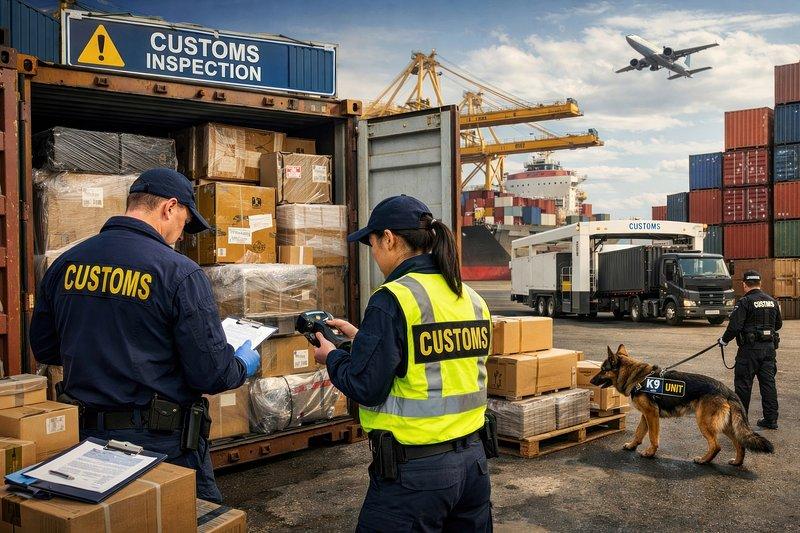
One of the most important stages of the entire import process is customs clearance.
Your shipment may have arrived safely at the destination port, but that does not mean you can immediately collect your merchandise.
Before the goods can enter the destination market, customs authorities must verify the shipment, review the required documentation, assess applicable duties and taxes, and determine whether the products comply with import regulations.
For businesses importing into Côte d’Ivoire, Rwanda, and other African markets, understanding customs clearance is essential for controlling costs, avoiding unnecessary delays, and protecting profit margins.
In this guide, we explain how customs clearance works, the documents required, how duties and taxes are calculated, and the most common mistakes importers should avoid.
1. What Is Customs Clearance?
Customs clearance is the administrative and regulatory process through which imported or exported goods are declared to customs authorities and authorized to enter or leave a country.
For imports, the process generally involves:
- Submitting the customs declaration.
- Providing commercial and transportation documents.
- Classifying the products under the appropriate customs tariff codes.
- Establishing the customs value of the merchandise.
- Verifying applicable import restrictions and regulatory requirements.
- Calculating duties and taxes.
- Paying the required charges or arranging an authorized payment mechanism.
- Obtaining customs release.
Important: Customs clearance is not simply about paying import taxes. It is also about demonstrating that the goods comply with the destination country’s laws and regulations.
2. How Does the Customs Clearance Process Work?
Although customs procedures differ between countries, most commercial imports follow a broadly similar process.
Typical import customs clearance workflow
1. Goods arrive at the destination port or airport
2. Import documents are submitted
3. Customs declaration is registered
4. Customs reviews the declaration and assesses risk
5. Duties and taxes are assessed and settled
6. Inspection or additional verification, if required
7. Customs release and cargo delivery
Illustrative sequence. Documentation, inspections, payments, and approvals may occur in a different order or in parallel depending on the country.
Step 1: Arrival of the goods
The shipment arrives at the destination seaport, airport, or authorized inland customs facility.
The shipping company or its agent provides arrival information and the relevant cargo documentation.
Step 2: Submission of documents
The importer or appointed customs broker prepares the documentation required for the shipment.
These documents establish the identity, value, origin, quantity, and characteristics of the merchandise.
Step 3: Customs declaration
A customs declaration is submitted through the applicable national customs system.
It identifies the imported products, their tariff classification, customs value, origin, and the requested customs procedure.
Step 4: Customs verification
Customs authorities may verify the declared information against supporting documents.
Depending on the applicable risk assessment, the shipment may undergo documentary checks, scanning, or physical inspection.
Step 5: Assessment of duties and taxes
The applicable customs duties, import VAT, and other charges are determined according to the destination country’s legislation.
Step 6: Inspection, when required
Customs or other regulatory authorities may inspect the goods to confirm their description, quantity, origin, or compliance with applicable requirements.
Step 7: Release of goods
Once the relevant conditions have been satisfied, customs may authorize release.
The importer must also complete any remaining terminal, carrier, and delivery formalities before collecting the shipment.
3. Essential Documents Required for Customs Clearance
Incomplete or inconsistent documentation is a common cause of customs delays.
The exact documents depend on the country, product, transport method, and applicable regulations.
However, several documents are commonly required for commercial imports.
| Document | Main purpose |
|---|---|
| Commercial Invoice | Establishes the transaction details, prices, buyer, seller, and goods |
| Packing List | Specifies quantities, packages, weights, and dimensions |
| Bill of Lading (B/L) | Transport document used for maritime shipments |
| Air Waybill (AWB) | Transport document used for air shipments |
| Certificate of Origin | Supports origin determination when required |
| Import Permit or License | Authorizes imports of regulated products |
| Insurance Certificate | Provides evidence of insurance where applicable |
| Customs Declaration | Formally declares the goods to customs |
| Product Compliance Certificates | Demonstrates conformity where required |
Commercial Invoice
The commercial invoice is one of the most important documents.
It should normally identify:
- Exporter and importer.
- Invoice number and date.
- Product descriptions.
- Quantities and unit prices.
- Total transaction value.
- Currency.
- Applicable Incoterm and named place.
- Relevant transaction details.
Descriptions should be sufficiently specific to support customs classification.
For example, describing a shipment merely as “electronic products” may be inadequate.
A more precise description such as “LED ceiling lights, 18 W, 220–240 V” provides more useful information.
Packing List
The packing list explains how the merchandise is physically packed.
It typically includes carton counts, gross and net weights, dimensions, and product quantities.
Bill of Lading
The Bill of Lading is issued in connection with maritime transportation.
Depending on its form, it can serve as evidence of the carriage contract, a receipt for goods, and potentially a document of title.
Certificate of Origin
This document provides evidence of the origin of goods under applicable rules.
It may be necessary for certain imports or for claiming preferential tariff treatment under a trade agreement.
Key lesson: The information on your commercial invoice, packing list, and transport documents should be accurate and consistent.
4. What Is an HS Code, and Why Is It Important?
Every importer should understand the role of the Harmonized System (HS).
The HS is an internationally standardized system used to classify traded goods.
It is maintained by the World Customs Organization.
The international HS classification is based on six-digit headings and subheadings, while countries or customs unions may add further digits for national tariff and statistical purposes.
Why Does the HS Code Matter?
The classification of a product can determine:
- Applicable customs duty rates.
- Import restrictions.
- Required licenses.
- Regulatory controls.
- Trade statistics.
- Eligibility for certain tariff preferences.
Example
Consider an importer purchasing several products from China:
| Product | Classification consideration |
|---|---|
| LED lighting equipment | Function, construction, and product type |
| Automotive spare parts | Specific part and intended use |
| Handbags | Outer surface material and construction |
| Industrial machinery | Function and technical characteristics |
| Electrical circuit breakers | Electrical specifications and equipment type |
These products may fall under different tariff classifications and duty rates.
Even products that appear similar can have different classifications depending on their technical characteristics.
Warning: Do not select an HS code simply because it appears to attract a lower duty rate. Incorrect classification can lead to reassessment, penalties, delays, or seizure.
For complex products, obtain a classification opinion from a qualified customs professional or request an official ruling where available.
5. How Are Customs Duties and Import Taxes Calculated?
This is one of the most important questions for importers.
Many buyers assume customs duties are calculated directly on the supplier’s invoice price.
In practice, the customs value may include additional elements according to the applicable valuation rules.
Under the WTO Customs Valuation Agreement, transaction value is generally the primary method of valuation, subject to conditions and prescribed adjustments.
The treatment of international freight and insurance depends on the importing country’s valuation rules.
Example: Calculating Import Duties
Suppose an importer purchases equipment from China with the following hypothetical costs:
| Expense | Amount |
|---|---|
| Product value | $10,000 |
| International freight | $1,500 |
| Insurance | $100 |
| Assumed customs value | $11,600 |
For this example, assume the importing country includes these amounts in the customs value.
If the applicable customs duty rate is 10%:
Customs duty calculation
Customs Duty = Customs Value × Duty Rate
$11,600 × 10% = $1,160
Now assume an illustrative import VAT rate of 18%, calculated on the customs value plus customs duty, with no other additions.
The VAT taxable base would be:
$11,600 + $1,160 = $12,760
Import VAT:
$12,760 × 18% = $2,296.80
Total Estimated Customs Charges
| Charge | Amount |
|---|---|
| Customs duty | $1,160.00 |
| Import VAT | $2,296.80 |
| Total | $3,456.80 |
Illustrative total duties and VAT
$3,456.80
Excludes any other applicable levies, fees, and clearance costs.
These rates and assumptions are hypothetical. They are not the actual tariff calculation for Côte d’Ivoire, Rwanda, or any other specific country.
Real calculations may involve additional levies, exemptions, special taxes, different VAT bases, or preferential duty treatment.
Importers should obtain a product-specific customs estimate before placing a substantial order.
6. What Is the Difference Between Customs Duties, VAT, and Clearance Fees?
Importers sometimes refer to all import-related expenses as “customs fees.”
However, these charges are not the same.
| Charge | Explanation |
|---|---|
| Customs Duty | Tax imposed on imported goods according to applicable tariff rules |
| Import VAT | Value-added tax assessed on importation under national tax law |
| Excise Duty | Additional tax applicable to certain product categories |
| Customs Processing Fees | Administrative charges where imposed |
| Customs Brokerage Fees | Service fees charged by a customs broker |
| Terminal Handling Charges | Fees for port or terminal services |
| Storage Charges | Fees for keeping goods at a facility beyond applicable terms |
| Delivery Charges | Transportation from the port or airport to the final destination |
This distinction is essential when preparing your import budget.
For example, a customs broker may quote a fee for completing the clearance formalities.
That brokerage fee does not necessarily include customs duties, VAT, port charges, or final delivery.
Always request a detailed breakdown of the expected expenses.
7. Customs Clearance in Côte d’Ivoire: What Importers Should Know
Côte d’Ivoire is a major destination for Chinese manufactured goods, including machinery, construction materials, electronics, textiles, and consumer products.
Importers should understand that the customs process involves both national requirements and the applicable regional trade framework.
Côte d’Ivoire is a member of the West African Economic and Monetary Union (WAEMU/UEMOA) and the Economic Community of West African States (ECOWAS/CEDEAO).
The applicable tariff treatment depends on the product classification, origin, and current regulations.
Key Considerations
1. Product classification
Determine the appropriate tariff classification before confirming your purchase.
2. Import documentation
Verify the required commercial, transportation, and regulatory documents.
3. Pre-import formalities
Certain products and transactions may require registration, declarations, conformity procedures, or authorizations before shipment.
4. Customs valuation
Ensure the declared value and supporting documents comply with the applicable valuation rules.
5. Local clearance coordination
Work with an appropriately authorized customs broker or logistics professional who understands the procedures at the Port of Abidjan and other relevant entry points.
Practical Example
Suppose a business in Abidjan orders electrical equipment from Guangzhou.
Before shipment, the importer should confirm:
- Whether the products require specific conformity documentation.
- Their correct tariff classifications.
- The applicable import duties and taxes.
- The documents required for customs clearance.
- The estimated destination handling charges.
- The expected release and delivery arrangements.
This preparation reduces the risk of discovering unexpected requirements after the goods arrive.
For current procedures and tariff information, consult the Direction Générale des Douanes de Côte d’Ivoire and the relevant national trade authorities.
8. Customs Clearance in Rwanda: Key Considerations
Rwanda is a landlocked country, which creates additional logistics considerations for importers purchasing from China.
Many maritime shipments destined for Rwanda enter East Africa through regional seaports before continuing by road or other available inland transport arrangements.
Importers must distinguish between:
- Maritime transportation to the regional port.
- Transit procedures through relevant countries.
- Inland transportation to Rwanda.
- Import customs clearance in Rwanda.
- Final delivery to the consignee.
Rwanda is a member of the East African Community (EAC), whose customs framework is relevant to many imports.
Example: Importing Machinery to Kigali
Suppose a company purchases a concrete block-making machine from a Chinese manufacturer.
The importer should verify:
- The correct HS classification.
- The applicable customs duty and tax treatment.
- Whether any exemptions or investment-related incentives may apply.
- Required technical and commercial documentation.
- Transit and inland transportation arrangements.
- Customs clearance requirements in Rwanda.
Machinery can involve complex classifications, especially when the shipment includes separate components, accessories, and production-line equipment.
Importers should not assume that all machinery qualifies for the same tariff treatment.
For current requirements, consult the Rwanda Revenue Authority.
9. How Do Incoterms Affect Customs Clearance?
Incoterms are important because they determine how certain transportation responsibilities, costs, and risks are allocated between buyers and sellers.
However, Incoterms do not replace customs legislation.
FOB — Free On Board
The seller generally handles export clearance and delivers the goods on board the vessel. The buyer arranges the main carriage and generally handles import clearance.
CIF — Cost, Insurance and Freight
The seller pays for the main ocean freight and minimum required insurance to the named destination port. The buyer generally handles import clearance and applicable import duties and taxes.
DDP — Delivered Duty Paid
The seller assumes extensive delivery obligations, including import clearance and applicable duties and taxes. This arrangement requires particular care because the seller must be legally able to perform those obligations in the destination country.
A Common Misunderstanding
An importer receives a quotation:
CIF Abidjan: $15,000
The importer assumes the merchandise will be delivered directly to their warehouse without additional payment.
This assumption is incorrect.
CIF generally covers the agreed cost of goods, ocean freight, and minimum insurance to the named destination port.
It does not automatically include:
- Import duties.
- Import VAT.
- Customs brokerage.
- Destination terminal charges.
- Port storage.
- Final inland delivery.
Before accepting a supplier quotation, understand exactly where the seller’s obligations end and yours begin.
10. How Long Does Customs Clearance Take?
There is no universal customs clearance timeframe.
The duration depends on the destination country, shipment type, documentation, regulatory controls, and customs procedures.
A straightforward shipment with accurate documents and no additional inspection may be released relatively quickly.
Other shipments can experience delays lasting several days or longer.
Factors Affecting Clearance Time
- Incorrect or missing documents.
- Disputed customs values.
- Incorrect HS classification.
- Physical inspection requirements.
- Missing import permits.
- Product conformity issues.
- Delayed payment of duties and taxes.
- Port congestion.
- System interruptions.
- Unresolved carrier or terminal formalities.
How to Improve Clearance Efficiency
Start preparing your import documentation before the vessel or aircraft arrives.
Where permitted, use advance declaration or pre-arrival processing procedures.
Coordinate with your customs broker and logistics provider to confirm that all necessary information is available.
The best time to prepare for customs clearance is before your goods leave China, not after they arrive.
11. Common Customs Clearance Mistakes Importers Should Avoid
Many customs problems can be prevented through better preparation.
Mistake 1: Using vague product descriptions
Descriptions such as “accessories,” “spare parts,” or “general merchandise” may be insufficient.
Provide accurate descriptions and relevant technical specifications.
Mistake 2: Incorrect HS classification
An incorrect tariff code may result in additional duties, penalties, or delays.
Mistake 3: Underdeclaring the value of goods
Some importers request artificially low commercial invoices to reduce taxes.
This is a serious compliance risk.
Customs authorities may challenge the declared value, reassess duties, impose penalties, or take other enforcement measures.
Mistake 4: Shipping without checking import restrictions
Certain products require special authorizations, testing, or conformity documentation.
These requirements should be verified before the shipment is dispatched.
Mistake 5: Confusing freight costs with customs costs
Paying for transportation does not mean that customs clearance has been paid.
Mistake 6: Ignoring destination charges
Port handling, storage, and container-related fees can significantly increase the final bill.
Mistake 7: Choosing an unreliable customs broker
An inexperienced or poorly coordinated broker can cause unnecessary delays and compliance problems.
Mistake 8: Waiting until arrival to prepare documents
Late preparation can result in avoidable storage and delay charges.
Customs compliance should be part of your procurement planning, not an afterthought.
12. How to Estimate the Total Landed Cost of Imported Goods
Understanding customs clearance is essential for calculating the real cost of your imports.
The landed cost includes more than the supplier’s invoice.
Total Landed Cost =
Product Cost + Origin Charges + International Freight + Insurance + Import Duties + Nonrecoverable Taxes + Clearance Fees + Destination Charges + Final Delivery
Example: Importing Products from China
Suppose an importer purchases 3,000 units of merchandise.
| Expense | Amount |
|---|---|
| Product cost | $15,000 |
| Origin charges | $350 |
| International freight | $2,200 |
| Insurance | $100 |
| Import duties | $1,800 |
| Nonrecoverable import taxes | $2,400 |
| Customs brokerage | $250 |
| Destination handling | $500 |
| Final delivery | $400 |
| Total landed cost | $23,000 |
The figures are hypothetical and are not based on a particular country’s tariff schedule.
Cost per unit:
Landed cost per unit
$23,000 ÷ 3,000 = $7.67 per unit (rounded)
Factory price per unit
$5.00
Landed cost per unit
$7.67
The product’s factory price is only $5 per unit, but its total landed cost is approximately $7.67.
This difference can substantially affect selling prices and profitability.
Importers should calculate their estimated landed costs before confirming substantial purchase orders.
13. Who Is Responsible for Customs Clearance?
Several parties may be involved in the clearance process.
Importer of Record
The importer of record is the party legally responsible for the import declaration and associated obligations under the destination country’s laws.
The precise legal definition and responsibilities vary by jurisdiction.
Customs Broker
A customs broker is a professional or authorized entity that assists with customs declarations, documentation, classification, and clearance formalities.
Freight Forwarder
A freight forwarder organizes transportation and may coordinate customs services through its own authorized operations or external brokers.
Not every freight forwarder is licensed to perform customs brokerage.
Supplier or Exporter
The supplier provides commercial documentation and product information and may be responsible for export formalities under the agreed Incoterm.
Sourcing and Procurement Partner
A sourcing partner can help coordinate documentation, obtain accurate product specifications, and communicate with suppliers and logistics providers.
However, a sourcing partner is not automatically authorized to act as a customs broker.
Clearly assigning responsibilities before shipment helps prevent costly misunderstandings.
14. Can You Clear Customs Without a Customs Broker?
In some countries and for certain shipments, importers may be legally permitted to submit customs declarations themselves.
However, the rules vary by jurisdiction, shipment type, and importer status.
For commercial imports, using a qualified customs broker is often advisable, especially when the shipment involves:
- High-value merchandise.
- Machinery or technical equipment.
- Regulated products.
- Multiple tariff classifications.
- Complex customs valuation.
- Special permits or exemptions.
The objective is not simply to complete paperwork.
It is to ensure the declaration is accurate and that the importer meets the applicable legal requirements.
For businesses importing into unfamiliar markets, professional customs assistance can reduce compliance risks.
15. Practical Customs Clearance Checklist for Importers
Proper preparation is essential to avoiding customs delays, unexpected expenses, and compliance issues.
Before shipping goods from China, use the following checklist to ensure your import documentation and logistics arrangements are in order.
Before Placing Your Order
- Verify Import Eligibility: Confirm that the products can legally be imported into the destination country.
- Identify the Correct HS Code: Determine the appropriate customs classification for each product.
- Estimate Import Duties and Taxes: Verify applicable customs duties, VAT, and other government levies.
- Check Regulatory Requirements: Determine whether import licenses, permits, or conformity certificates are required.
Before Shipping from China
- Prepare the Commercial Invoice: Ensure product descriptions, quantities, prices, and transaction details are accurate.
- Verify the Packing List: Confirm that package quantities, weights, and dimensions match the actual shipment.
- Review Shipping Documents: Check the Bill of Lading or Air Waybill for accuracy.
- Confirm the Incoterm: Understand the responsibilities of the buyer and seller under the agreed Incoterm.
- Check Certificate of Origin Requirements: Determine whether a certificate of origin is necessary.
Before the Shipment Arrives
- Appoint a Qualified Customs Broker: Work with an authorized professional where necessary.
- Estimate Clearance Costs: Obtain a breakdown of customs brokerage, port handling, and destination charges.
- Submit Documents Early: Prepare and submit the necessary documentation within the applicable deadlines.
- Arrange Payment: Confirm how and when customs duties and taxes will be settled.
Before Collecting Your Goods
- Coordinate Cargo Release and Delivery: Arrange customs release, cargo pickup, and transportation to the final destination.
- Calculate Your Total Landed Cost: Include the product price, freight, insurance, duties, nonrecoverable taxes, clearance fees, and delivery expenses.
16. How Herogroupe Helps Importers Prepare for Customs Clearance
At Herogroupe, we understand that customs clearance begins long before a shipment reaches its destination.
Accurate product information, consistent commercial documents, and effective coordination between suppliers and logistics providers are essential for a smooth import process.
As a China-based sourcing and procurement company, Herogroupe supports international buyers through:
- Product sourcing and supplier verification.
- Commercial negotiations.
- Supplier communication.
- Product specifications and documentation coordination.
- Quality control and pre-shipment inspections.
- Packing list and commercial invoice coordination.
- Freight quotation comparison.
- Logistics coordination with relevant service providers.
For importers in Côte d’Ivoire, Rwanda, and other African markets, our role is to help ensure that procurement and shipment information is properly organized before the goods leave China.
Where customs brokerage or specialized regulatory advice is required, importers should engage appropriately authorized professionals in the destination country.
Our objective is to reduce avoidable procurement and logistics problems while helping businesses manage their international supply chains more effectively.
Frequently Asked Questions About Customs Clearance
What happens if my goods are held by customs?
Customs may request additional documents, clarification, payment, inspection, or compliance evidence.
The importer or customs broker should determine the reason for the hold and respond through the applicable official procedure.
Can customs reject or seize imported goods?
Yes. Depending on the country’s laws, goods may be detained, rejected, seized, or subject to other enforcement action for reasons such as prohibited imports, serious misdeclaration, counterfeit products, or regulatory noncompliance.
Does CIF include customs clearance?
Generally, no. Under CIF Incoterms 2020, the buyer is responsible for import clearance and applicable import duties and taxes, unless a separate agreement provides additional services.
Are customs duties the same in every country?
No. Duty rates and import taxes depend on the destination country’s tariff schedule, product classification, origin, and applicable trade arrangements.
Can I know the customs charges before shipping?
You can usually obtain an estimate based on the product’s classification, customs value, origin, and destination regulations.
The final amount may change following customs verification or other applicable adjustments.
Does every shipment require physical inspection?
No. Customs authorities generally apply risk-based controls, and not every shipment is physically inspected.
Is customs clearance included in freight forwarding services?
Not necessarily. It depends on the scope of the freight forwarder’s services and the terms of the quotation.
Always verify whether customs brokerage, duties, taxes, and destination charges are included.
Conclusion: Successful Customs Clearance Starts Before Shipping
Customs clearance is a critical stage of international trade.
A shipment does not become commercially successful simply because the supplier manufactured the products correctly or the goods arrived at the destination port.
Importers must also ensure that the merchandise is properly classified, accurately declared, compliant with applicable regulations, and supported by the necessary documentation.
The most effective approach is to prepare early, understand the full cost of importation, and coordinate with qualified professionals.
The best way to avoid customs problems is to prevent them before your shipment leaves China.
At Herogroupe, we help international businesses source products, verify suppliers, coordinate documentation, manage quality control, and organize logistics activities from China.
Source strategically. Import confidently. Protect your margins.
Herogroupe — Your sourcing and procurement partner on the ground in China.
Contact: contact@herogroupe.com
Website: www.herogroupe.com