Discover practical ways to reduce international shipping expenses, optimize packaging, compare FCL and LCL, consolidate shipments, negotiate freight rates, and improve your import profitability.
Importing products from China can be highly profitable, but international shipping costs can quickly reduce your margins if they are not properly managed.
You may negotiate an excellent price with a Chinese manufacturer, only to discover that freight charges, port handling fees, customs clearance, and inland transportation significantly increase your total expenses.
For many importers, the problem is not simply that shipping is expensive.
The real problem is that freight costs are often treated as an unavoidable expense rather than something that can be strategically managed.
In reality, several decisions made before your goods leave the factory can have a major impact on transportation costs.
Packaging dimensions, order quantities, container utilization, shipping methods, supplier locations, and freight quotation terms all influence how much you ultimately pay.
In this guide, we explain 15 practical strategies to reduce freight costs when importing from China, with examples relevant to wholesalers, distributors, retailers, and businesses importing into Africa and other international markets.
1. Understand What You Are Actually Paying For
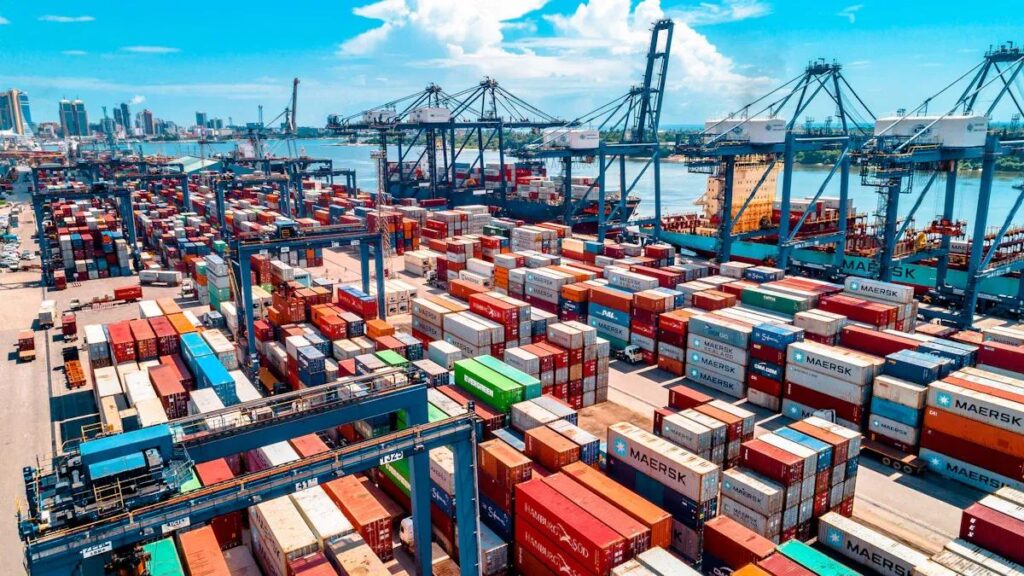
Before trying to reduce freight expenses, you must understand how those expenses are calculated.
International shipping costs typically involve several components:
- Origin charges: Factory pickup, inland transportation, export documentation, and terminal handling.
- International freight: Ocean freight, air freight, or express courier charges.
- Destination charges: Port handling, cargo release, storage, and other local fees.
- Customs-related expenses: Brokerage fees, duties, and applicable taxes.
- Final delivery: Transportation from the destination port or airport to your warehouse.
Some quotations include only the international freight component, while others cover additional services.
Example
Two freight forwarders offer the following hypothetical quotations for the same shipment:
| Expense | Forwarder A | Forwarder B |
|---|---|---|
| Ocean freight | $1,200 | $1,450 |
| Origin charges | $250 | $200 |
| Destination handling | $600 | $250 |
| Documentation | $100 | $75 |
| Total | $2,150 | $1,975 |
Forwarder A advertises cheaper ocean freight.
However, Forwarder B is $175 cheaper when all the listed charges are considered.
Lesson: Never compare freight quotations using the ocean freight rate alone. Compare the total cost for the same services, route, cargo, and delivery terms.
2. Optimize Your Product Packaging
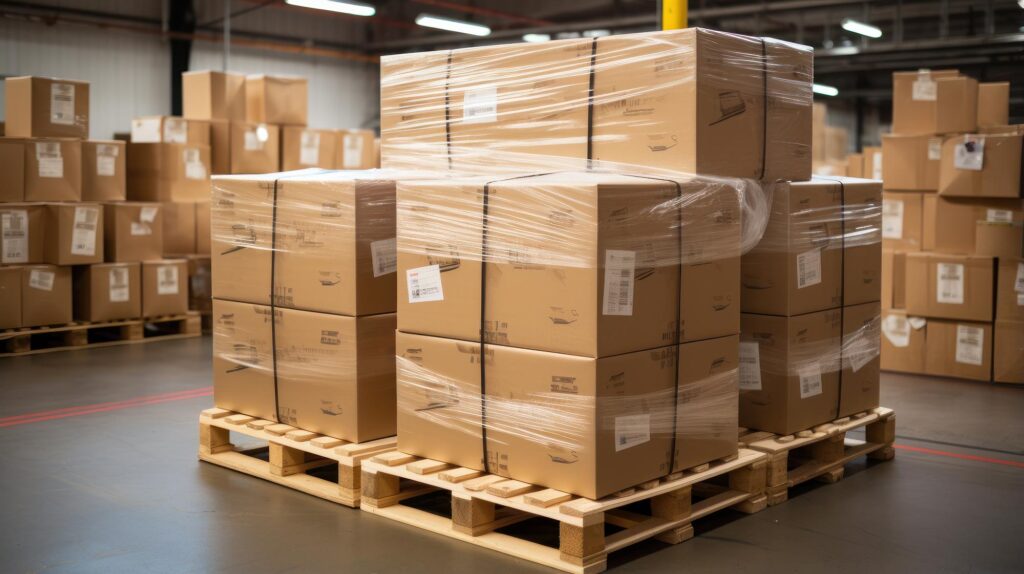
Packaging optimization is one of the most overlooked opportunities to reduce shipping expenses.
Freight companies frequently calculate transportation charges based on the space occupied by your products.
This means that unnecessarily large cartons can increase your costs even when the products themselves are lightweight.
Example: Reducing Carton Volume
Suppose you import 500 cartons of household products.
Each carton initially measures:
- Length: 60 cm
- Width: 50 cm
- Height: 40 cm
The volume per carton is:
Original volume per carton
0.60 × 0.50 × 0.40 = 0.12 CBM
For 500 cartons:
0.12 × 500 = 60 CBM
After discussing packaging optimization with the manufacturer, the carton dimensions are reduced to:
- Length: 55 cm
- Width: 45 cm
- Height: 35 cm
The new volume per carton becomes:
Optimized volume per carton
0.55 × 0.45 × 0.35 = 0.086625 CBM
For 500 cartons:
0.086625 × 500 = 43.3125 CBM
Illustrative packaging optimization
Original volume
60 CBM
Optimized volume
43.31 CBM
27.8% less volume
This reduction could generate meaningful savings on volume-based freight or improve container utilization.
However, the savings are not automatic. If you already pay a fixed rate for an entire container, reducing volume does not necessarily reduce that container’s freight charge.
What Should You Ask Your Supplier?
Request that the manufacturer evaluate:
- Smaller carton dimensions.
- Reduced empty space inside cartons.
- More efficient product arrangement.
- Appropriate disassembly of bulky products.
- Alternative protective packaging.
- Safe stacking arrangements.
Important: Never compromise product protection merely to reduce shipping volume. Damaged merchandise can cost far more than the freight savings.
3. Choose the Right Shipping Method
Not every shipment should be transported by air.
Likewise, ocean freight is not always the most practical option.
The right transportation method depends on the nature of your products, shipment size, urgency, and commercial priorities.
Ocean Freight
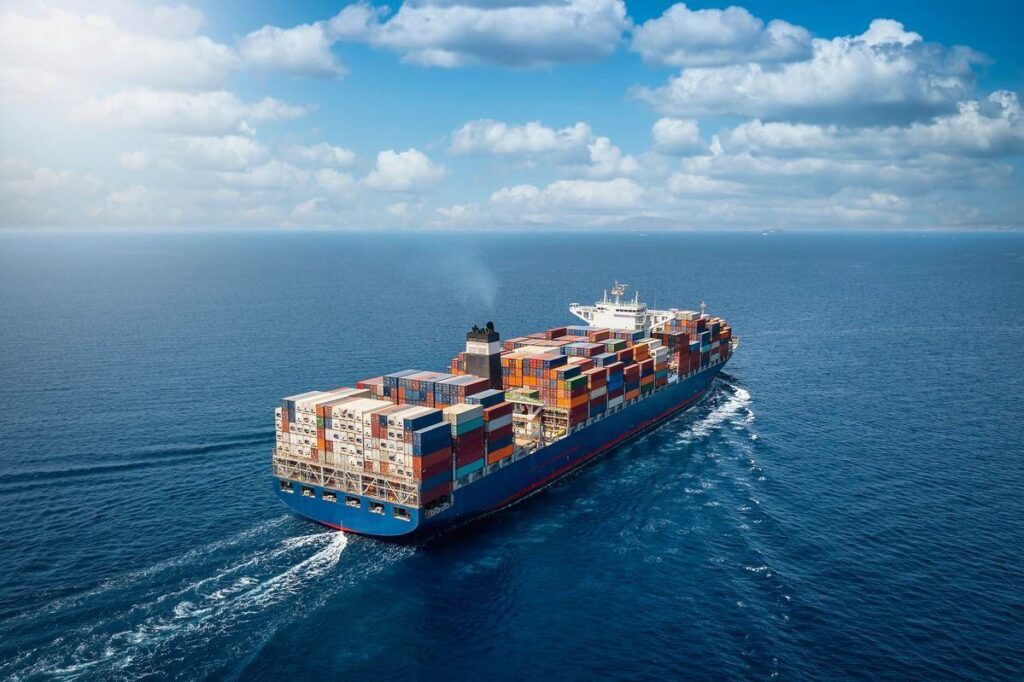
Generally suitable for large shipments, heavy machinery, furniture, construction materials, and nonurgent merchandise. Often economical per unit for substantial quantities.
Air Freight
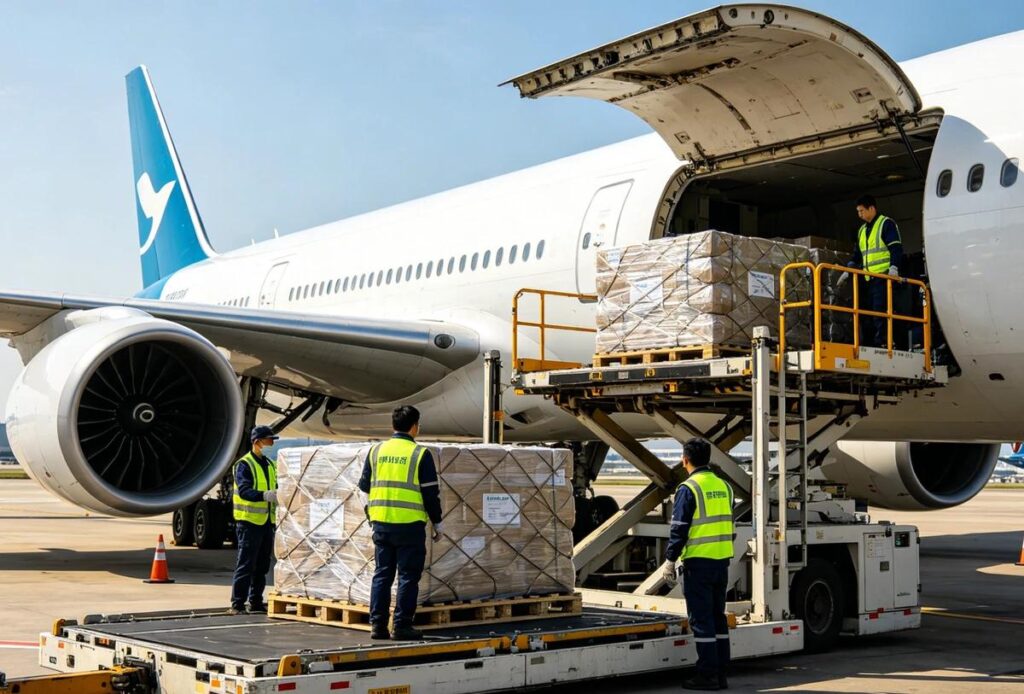
Suitable for urgent orders, high-value products, and merchandise requiring faster delivery. Usually more expensive than ocean freight.
Express Courier
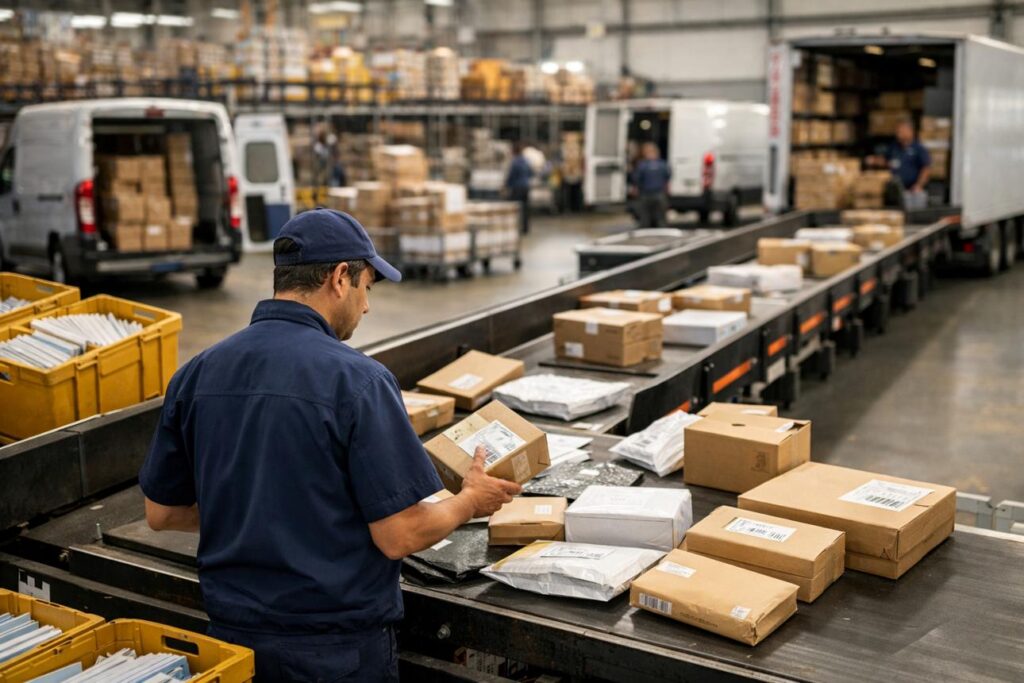
Convenient for samples, documents, and small parcels, but potentially expensive for bulky or heavy commercial shipments.
Practical Example
Imagine you are importing 2,000 handbags from Guangzhou to Abidjan.
If the products are needed for an immediate promotional campaign, air freight may be commercially justified.
However, if you are replenishing regular inventory and have sufficient stock available, ocean freight may offer a lower transportation cost.
The objective is not always to select the fastest option. It is to select the most economical option that meets your business requirements.
4. Compare FCL and LCL Before Booking
One of the most important decisions in ocean freight is whether to use FCL or LCL.
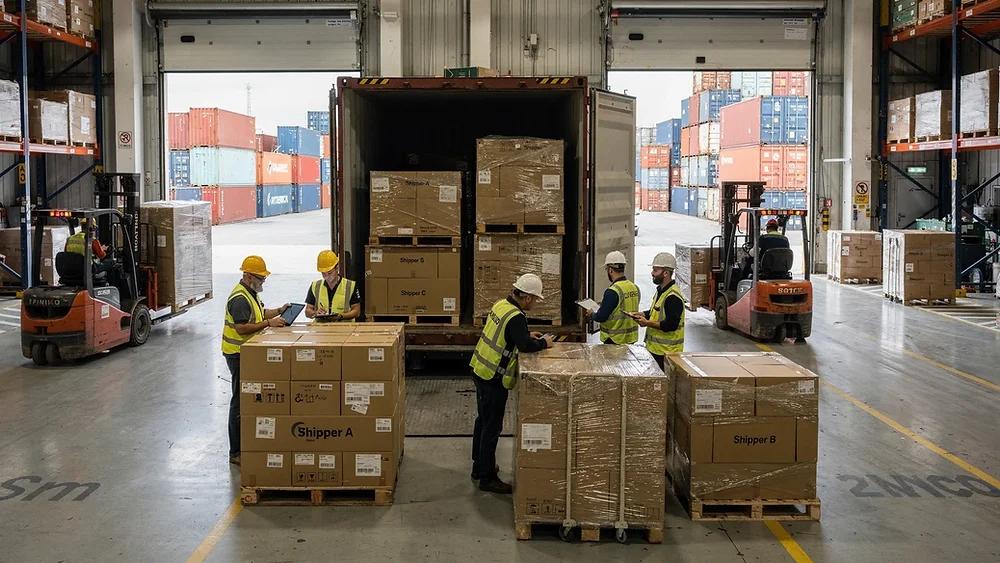
FCL — Full Container Load: You reserve an entire shipping container.
LCL — Less than Container Load: Your cargo shares container space with shipments belonging to other importers.
When Is LCL More Economical?
LCL is often suitable for smaller shipments that do not justify booking an entire container.
You generally pay according to cargo volume or weight, subject to the freight provider’s tariff.
When Is FCL More Economical?
FCL may become more economical as shipment volume increases.
However, there is no universal CBM threshold at which FCL automatically becomes cheaper.
Example: FCL vs LCL
Suppose a freight forwarder provides the following hypothetical rates:
- LCL: $110 per chargeable CBM, assuming the shipment is volume-rated.
- FCL 20GP: $2,000 for the equivalent quoted services.
| Shipment volume | LCL cost | FCL cost |
|---|---|---|
| 5 CBM | $550 | $2,000 |
| 10 CBM | $1,100 | $2,000 |
| 15 CBM | $1,650 | $2,000 |
| 18 CBM | $1,980 | $2,000 |
| 20 CBM | $2,200 | $2,000 |
| 25 CBM | $2,750 | $2,000 |
■ LCL
■ FCL
Hypothetical comparison assuming equivalent service scope and volume-based LCL pricing.
The theoretical break-even point is:
FCL / LCL break-even calculation
$2,000 ÷ $110 = 18.18 CBM
In this example, FCL becomes cheaper above approximately 18.18 CBM.
Actual results depend on the route, destination charges, weight, and container availability.
Recommendation: Request both FCL and LCL quotations when your cargo volume makes the comparison relevant.
5. Consolidate Shipments from Multiple Suppliers
Many importers purchase products from several Chinese manufacturers.
For example:
- Electronics from Shenzhen.
- Clothing from Guangzhou.
- Household products from Foshan.
- Accessories from Yiwu.
If each supplier ships separately, the importer may incur multiple pickup, documentation, handling, and freight charges.
Consolidating these orders into a single shipment can sometimes reduce the total logistics bill.
How Shipment Consolidation Works
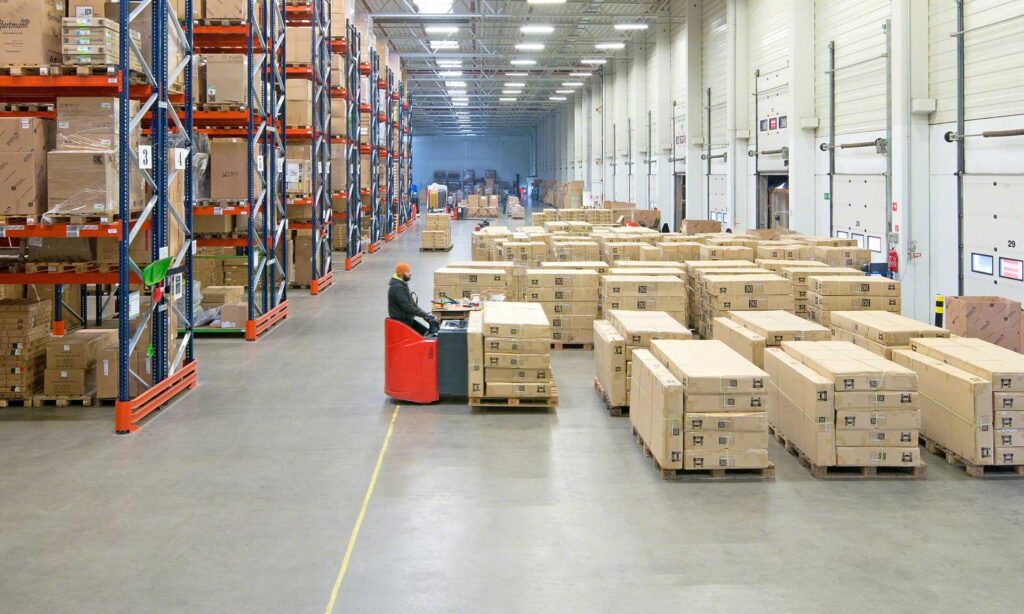
The process typically involves:
- Collecting goods from different suppliers.
- Transporting them to a consolidation warehouse.
- Checking quantities and packaging.
- Combining the cargo into one shipment.
- Arranging international transportation.
Example
Suppose three separate shipments cost:
| Shipment | Separate freight cost |
|---|---|
| Supplier A | $450 |
| Supplier B | $550 |
| Supplier C | $500 |
| Total | $1,500 |
After consolidation, suppose the combined international freight costs $1,050 and the additional consolidation services cost $200.
The total becomes $1,250.
Potential savings:
Savings from consolidation
$1,500 − $1,250 = $250
Savings percentage = ($250 ÷ $1,500) × 100 = 16.7%
These are hypothetical figures. Consolidation does not always reduce costs, particularly when suppliers are geographically distant or cargo requires special handling.
The key is to compare the complete cost of separate shipping against the complete cost of consolidation.
6. Negotiate Freight Rates with Multiple Forwarders
Just as you compare suppliers before purchasing products, you should compare freight forwarders before confirming transportation.
Freight rates can vary considerably between logistics providers.
Differences may result from:
- Carrier contracts.
- Available shipping routes.
- Cargo consolidation networks.
- Container availability.
- Destination partnerships.
- Handling fees.
- Service levels.
What Should You Compare?
Request quotations from at least two or three qualified freight forwarders when practical.
Provide identical cargo information to each provider.
Compare:
| Comparison factor | Why it matters |
|---|---|
| Total quoted cost | Reveals the overall expense |
| Transit time | Affects inventory planning |
| Origin charges | Identifies pickup and export costs |
| Destination charges | Helps avoid unexpected fees |
| Freight inclusions | Establishes the service scope |
| Quotation validity | Shows how long the rate applies |
| Carrier and routing | Affects reliability and transit time |
| Cargo insurance | Clarifies protection and exclusions |
A lower freight quotation is not automatically a better commercial offer.
The forwarder must also be reliable, transparent, and capable of handling your shipment.
7. Plan Shipments Ahead of Peak Seasons
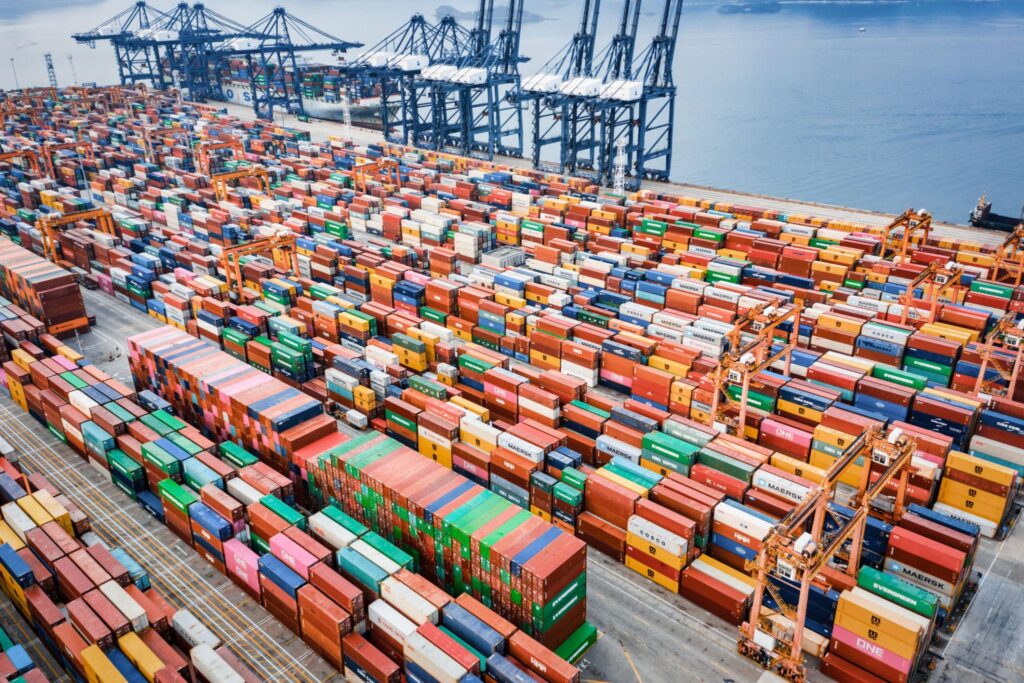
Freight rates can fluctuate throughout the year.
Demand for shipping capacity often increases during major production and retail cycles.
For businesses importing from China, important periods to consider include:
- Chinese New Year.
- The period before major international retail holidays.
- Seasonal inventory replenishment.
- Periods of increased export activity.
- Disruptions affecting shipping routes.
Why Planning Matters
Imagine you need merchandise for a major sales campaign in December.
If you wait until the last minute, you may have to choose expensive air freight to meet your deadline.
By ordering earlier and allowing sufficient transportation time, you may be able to use ocean freight instead.
However, ordering too early can also increase warehousing and inventory financing costs.
Effective planning means balancing transportation expenses, inventory costs, and stock availability.
8. Reduce Chargeable Weight for Air Freight
Air freight companies generally calculate charges using the greater of:
- Actual gross weight.
- Volumetric weight.
A common volumetric conversion for general air cargo is approximately:
1 CBM ≈ 167 kg
Volumetric weight (kg) = Length (cm) × Width (cm) × Height (cm) ÷ 6,000
The actual divisor may differ depending on the carrier and service.
Example
A carton measures:
- 60 cm × 50 cm × 40 cm.
- Actual weight: 12 kg.
Its volumetric weight is:
(60 × 50 × 40) ÷ 6,000 = 20 kg
The shipment may be charged at 20 kg rather than 12 kg.
If the supplier reduces the carton dimensions without compromising protection, the volumetric weight may decrease.
For example, at 50 × 40 × 35 cm:
(50 × 40 × 35) ÷ 6,000 = 11.67 kg
Since the actual weight remains 12 kg, the chargeable weight would become 12 kg, subject to the carrier’s measurement and rounding rules.
At an illustrative rate of $6/kg:
| Packaging | Chargeable weight | Base freight |
|---|---|---|
| Original | 20 kg | $120 |
| Optimized | 12 kg | $72 |
| Potential saving | 8 kg | $48 |
This example illustrates why packaging optimization can be particularly valuable for air freight.
9. Select the Most Suitable Chinese Port of Loading
China has several major export ports, including:
- Shenzhen.
- Guangzhou/Nansha.
- Shanghai.
- Ningbo-Zhoushan.
- Qingdao.
- Tianjin.
- Xiamen.
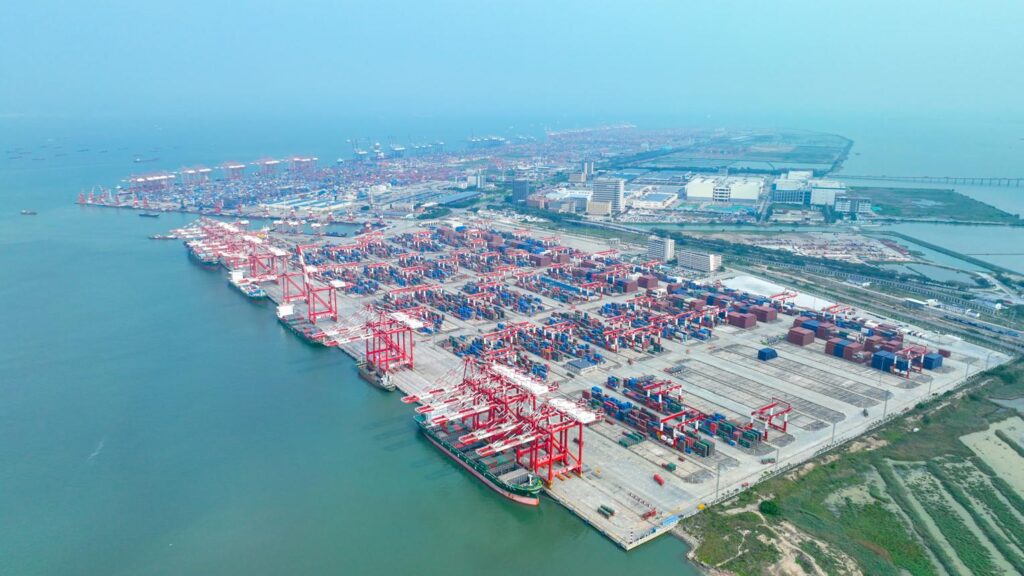
The best port is not necessarily the one offering the lowest ocean freight rate.
You must also consider:
- Distance from the supplier.
- Domestic trucking charges.
- Available shipping services.
- Transit time.
- Transshipment requirements.
- Terminal handling fees.
Practical Example
Suppose your supplier is located in Foshan, Guangdong.
Shipping through Nansha or Shenzhen may be operationally convenient, depending on the available service and the final destination.
A quotation from another port might appear cheaper for ocean freight, but additional inland transportation could eliminate the savings.
Always compare the combined cost of factory pickup, export handling, and international freight.
10. Understand Incoterms Before Comparing Prices
Incoterms determine how transportation responsibilities, costs, and risks are divided between the buyer and seller.
Common Incoterms include:
- EXW — Ex Works.
- FCA — Free Carrier.
- FOB — Free On Board.
- CFR — Cost and Freight.
- CIF — Cost, Insurance and Freight.
- DAP — Delivered at Place.
- DDP — Delivered Duty Paid.
Example: FOB vs CIF
A supplier offers:
- FOB Shenzhen: $10,000.
- CIF Abidjan: $11,500.
The difference is $1,500.
But this does not automatically mean the FOB quotation is cheaper overall.
Under FOB, the buyer generally arranges and pays for the main international carriage.
Under CIF, the seller arranges and pays for ocean freight and the minimum required insurance to the named destination port.
Import duties, taxes, destination clearance, and final delivery are not automatically included under CIF.
For containerized cargo delivered to a terminal before vessel loading, FCA or CIP may be more appropriate, depending on the intended arrangement.
The correct decision requires comparing the total costs and responsibilities under each option.
11. Avoid Demurrage, Detention, and Storage Charges
Some of the most frustrating logistics expenses arise after cargo arrives at its destination.
Three common charges are:
Demurrage: Generally applies when a carrier’s container remains inside a terminal beyond the permitted free period.
Detention: Generally applies when a carrier’s container remains outside the terminal beyond the permitted free period.
Storage: Charges imposed for keeping cargo or containers at a terminal or warehouse beyond applicable conditions.
How to Reduce These Charges
- Prepare import documentation before vessel arrival.
- Coordinate customs clearance in advance.
- Monitor vessel arrival notices.
- Confirm applicable free time.
- Arrange timely cargo pickup.
- Plan container unloading and return.
- Maintain communication with the freight forwarder and customs broker.
These charges can accumulate quickly.
Avoiding delays is therefore an important part of controlling freight-related expenses.
12. Consider Cargo Insurance and Damage Prevention
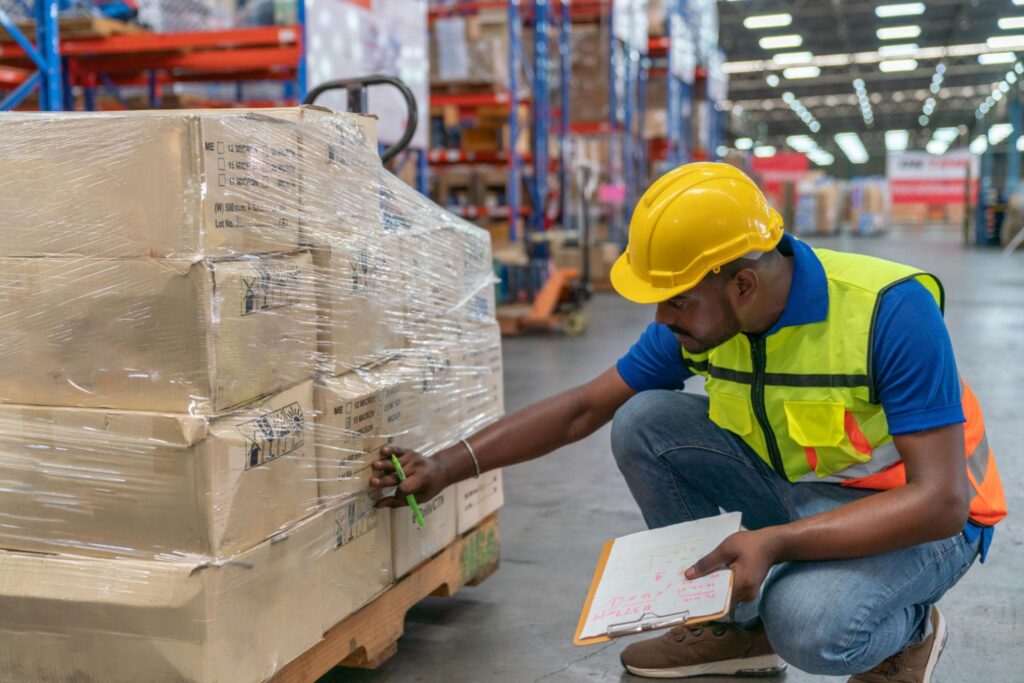
Some importers attempt to reduce shipping expenses by eliminating cargo insurance.
However, this can expose them to significant financial losses.
International shipments face risks such as:
- Cargo damage.
- Theft.
- Water exposure.
- Handling accidents.
- Transportation incidents.
- General average contributions in maritime shipping.
Cargo insurance is not simply an additional expense; it is a risk management tool.
Example
Suppose you import goods worth $30,000.
If the shipment is damaged or lost and you lack adequate insurance, your financial exposure could be substantial.
The appropriate insurance policy depends on the cargo, transport method, contractual obligations, and coverage conditions.
Cost reduction should never mean eliminating essential protection without understanding the consequences.
13. Improve Container Utilization
When booking FCL, you generally pay for the container rather than each individual carton.
This means that the number of products loaded into the container can significantly affect shipping cost per unit.
Example
Suppose the total quoted transportation cost for a container is $2,400.
If you load 8,000 products:
$2,400 ÷ 8,000 = $0.30 per product
If better packaging and loading allow 10,000 products in the same container:
$2,400 ÷ 10,000 = $0.24 per product
The cost falls from $0.30 to $0.24 per product.
Reduction in shipping cost per unit
20%
($0.30 − $0.24) ÷ $0.30 × 100 = 20%
Practical Ways to Improve Utilization
- Use consistent carton sizes.
- Optimize pallet dimensions.
- Reduce unnecessary packaging.
- Plan loading arrangements.
- Consider safe product disassembly.
- Verify weight distribution.
- Avoid exceeding payload limits.
Better utilization must never compromise cargo safety or legal loading requirements.
14. Calculate the Total Landed Cost Before Ordering
Freight optimization is not only about reducing the transportation bill.
It is about improving the overall economics of your import operation.
The total landed cost may include:
Total Landed Cost =
Product Cost + Origin Expenses + International Freight + Insurance + Import Duties and Taxes + Destination Handling + Final Delivery
The treatment of recoverable taxes depends on the applicable accounting and tax rules.
Example
| Expense | Amount |
|---|---|
| Products | $12,000 |
| Origin transportation | $400 |
| Ocean freight | $1,900 |
| Insurance | $100 |
| Destination handling | $450 |
| Customs and nonrecoverable import taxes (illustrative) | $2,300 |
| Final delivery | $350 |
| Total landed cost | $17,500 |
The import taxes are hypothetical and not a quotation for any particular product or destination.
If you import 2,500 units:
Landed cost per unit
$17,500 ÷ 2,500 = $7 per unit
This figure is more useful for pricing decisions than the supplier’s product price alone.
15. Work with a Reliable Sourcing and Logistics Coordination Partner
Reducing freight costs requires coordination between multiple parties:
- Suppliers.
- Warehouses.
- Freight forwarders.
- Customs brokers.
- Transport companies.
- Buyers.
Poor communication between these parties can result in unnecessary charges, delays, and operational mistakes.
For importers purchasing from several Chinese suppliers, having someone on the ground can simplify coordination.
A reliable sourcing and procurement partner can assist with:
- Supplier communication.
- Product and packaging verification.
- Coordination of production schedules.
- Consolidation planning.
- Freight quotation comparison.
- Pre-shipment inspections.
- Logistics coordination.
However, using an intermediary also involves a service fee.
The commercial benefit should therefore be evaluated against the time saved, risks reduced, and potential logistics efficiencies.
The objective is not to add unnecessary intermediaries. It is to improve coordination and reduce avoidable costs.
16. Freight Cost Reduction Checklist
Before confirming your next shipment from China, review the following checklist.
Shipment cost optimization checklist
0/14 completedObtain complete freight quotations with clearly defined inclusions.Verify gross weight, carton dimensions, and total CBM.Ask suppliers about safe packaging optimization.Compare air freight, ocean freight, and express where relevant.Compare FCL and LCL for suitable shipment volumes.Evaluate consolidation of orders from multiple suppliers.Compare at least two qualified freight forwarders.Check origin-port options and inland trucking costs.Confirm Incoterms and the responsibilities of each party.Verify freight quotation validity and transit time.Confirm cargo insurance requirements.Prepare import documentation before shipment arrival.Check demurrage, detention, and storage free periods.Calculate total landed cost and cost per unit.
Reset checklist
17. How Herogroupe Helps Importers Optimize Procurement and Logistics
At Herogroupe, we understand that successful importing requires more than negotiating the lowest factory price.
International buyers must also manage supplier reliability, product quality, packaging, transportation, and delivery coordination.
As a China-based sourcing and procurement company, Herogroupe supports international buyers through:
- Product sourcing and procurement.
- Supplier identification and verification.
- Price negotiations.
- Quality control and pre-shipment inspections.
- Supplier communication.
- Packaging and cargo information verification.
- Freight quotation comparison.
- Coordination with logistics partners.
Our presence on the ground in China enables us to communicate directly with manufacturers and coordinate procurement activities more efficiently.
For importers in Côte d’Ivoire and other African markets, we understand the importance of evaluating the complete cost of bringing merchandise from China to its destination.
Our objective is to help buyers make informed purchasing decisions, reduce avoidable risks, and improve supply chain efficiency.
Conclusion: Reducing Freight Costs Starts Before Your Goods Leave China
Reducing international freight costs does not simply mean finding the cheapest shipping company.
It requires a combination of smart procurement decisions, packaging optimization, careful transportation planning, and transparent logistics coordination.
The most effective strategies include:
- Reducing unnecessary cargo volume.
- Selecting the right transportation method.
- Comparing FCL and LCL.
- Consolidating shipments when economical.
- Negotiating and comparing complete freight quotations.
- Planning shipments ahead of time.
- Avoiding destination delays and unnecessary charges.
- Improving container utilization.
- Calculating the complete landed cost.
The cheapest freight quotation is not always the most economical shipping solution.
A successful importer focuses on the total cost, reliability, and efficiency of the entire supply chain.
At Herogroupe, we help international buyers navigate sourcing, supplier verification, procurement, quality control, and logistics coordination from China.
Source strategically. Ship efficiently. Protect your margins.
Herogroupe — Your sourcing and procurement partner on the ground in China.
Contact: contact@herogroupe.com
Website: www.herogroupe.com