Understand how import taxes work, how customs duties and VAT are calculated, what affects the amount you pay, and how to avoid unexpected expenses when importing goods from China.
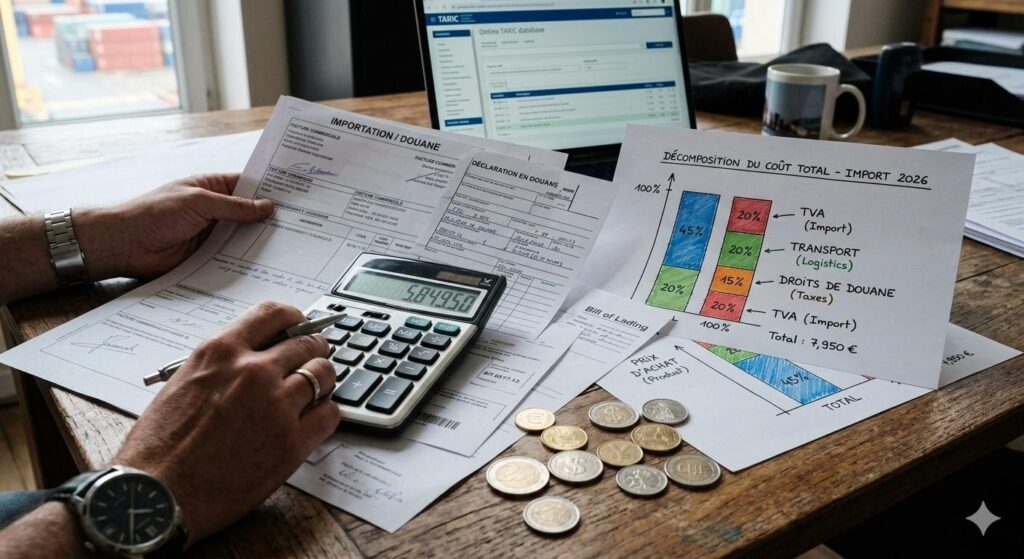
Importing products from China can offer businesses access to competitive manufacturing prices, a wide selection of suppliers, and opportunities to increase their profit margins.
However, the price quoted by your Chinese supplier is rarely the final amount you will spend to bring the products into your country.
Beyond manufacturing and international transportation, importers must consider customs duties, import VAT, additional government levies, and customs clearance charges.
These expenses can significantly increase the total cost of imported merchandise.
For businesses importing into Côte d’Ivoire, Rwanda, and other African markets, understanding import taxes is essential for making informed purchasing decisions, setting competitive selling prices, and protecting profitability.
In this guide, we explain the different types of import taxes, how they are calculated, what determines the applicable rates, and how importers can legally manage their tax exposure.
1. What Are Import Taxes?
Import taxes are taxes imposed by governments on goods entering a country.
They are generally collected through customs authorities or other designated government agencies.
Import taxes serve several purposes, including generating government revenue, implementing trade policies, and influencing competition between imported and domestically produced goods.
Depending on the country and the product, an importer may be required to pay:
- Customs duties.
- Value-added tax (VAT) on imports.
- Excise duties.
- Additional import levies or surcharges.
- Trade-remedy duties, such as anti-dumping or countervailing duties, where applicable.
Not every imported product is subject to every type of tax.
The amount payable depends on the product classification, customs value, country of origin, destination country, and applicable trade regulations.
Important: Import taxes should not be confused with freight charges, customs brokerage fees, or port handling expenses. These are different components of the total import cost.
2. The Main Types of Import Taxes Explained
Understanding the different taxes is the first step toward estimating the real cost of an import.
| Type of tax | Explanation |
|---|---|
| Customs Duty | A tariff imposed on imported goods according to applicable customs rules |
| Import VAT | Value-added tax collected when goods are imported |
| Excise Duty | Additional tax imposed on certain categories of products |
| Anti-Dumping Duty | Additional duty applied to specified imports following a relevant trade-remedy determination |
| Countervailing Duty | Duty imposed to address certain subsidized imports |
| Other Import Levies | Additional taxes or statutory charges established by the importing country |
Customs Duties
Customs duties are among the most common import taxes.
They may be calculated as a percentage of the customs value, as a fixed amount per unit, or using a combination of methods.
For example, if a product has a customs value of $10,000 and an applicable ad valorem duty rate of 10%:
Customs duty = $10,000 × 10% = $1,000
Import VAT
Import VAT is generally assessed when goods enter a country’s tax jurisdiction.
Its taxable base often includes the customs value and applicable customs duties, although the exact calculation depends on national legislation.
For VAT-registered businesses, import VAT may be recoverable or creditable under certain conditions.
That distinction matters: a recoverable tax may create a cash-flow burden without necessarily becoming a permanent product cost.
Excise Duties
Excise duties are generally applied to selected product categories.
Examples can include alcoholic beverages, tobacco products, fuel, and certain other goods, depending on the country.
Additional Import Levies
Some countries impose other statutory charges on imported merchandise.
These may be calculated using the customs value, product quantity, or another legally defined base.
Importers must verify which charges apply to their particular products.
3. How Are Import Taxes Calculated?
The calculation of import taxes usually begins with determining the customs value of the goods.
Customs valuation follows national legislation and applicable international rules.
Under the World Trade Organization’s Customs Valuation Agreement, transaction value is generally the primary valuation method, subject to specified conditions and adjustments.
The treatment of international freight, insurance, and other charges depends on the importing country’s rules.
Example: Importing Equipment from China
Suppose a company purchases industrial equipment from a Chinese manufacturer.
| Expense | Amount |
|---|---|
| Product value | $12,000 |
| International freight | $1,800 |
| Cargo insurance | $200 |
| Assumed customs value | $14,000 |
For this hypothetical example, assume the importing country includes the product value, freight, and insurance in the customs value.
We will also assume:
- Customs duty rate: 10%.
- Import VAT rate: 18%.
- VAT is calculated on the customs value plus customs duty.
- No other taxes or levies apply.
Step 1: Calculate Customs Duty
Customs Duty = Customs Value × Duty Rate
$14,000 × 10% = $1,400
Step 2: Determine the VAT Taxable Base
VAT Taxable Base = Customs Value + Customs Duty
$14,000 + $1,400 = $15,400
Step 3: Calculate Import VAT
Import VAT = VAT Taxable Base × VAT Rate
$15,400 × 18% = $2,772
Step 4: Calculate Total Import Taxes
| Tax | Amount |
|---|---|
| Customs duty | $1,400 |
| Import VAT | $2,772 |
| Total import taxes | $4,172 |
Illustrative import tax calculation
$4,172
Total duties and VAT on an assumed customs value of $14,000.
Customs duty
$1,400
Import VAT
$2,772
The importer would need to budget $4,172 for these illustrative taxes, in addition to any other applicable costs.
Note: The rates above are hypothetical. They do not represent the actual customs duty or VAT rates for Côte d’Ivoire, Rwanda, or any other specific country.
4. What Is Customs Value, and Why Does It Matter?
The customs value is the value established under applicable customs valuation rules for assessing duties and certain other charges.
It is not necessarily identical to the amount shown on the supplier’s invoice.
The Role of CIF Value
In many import systems, freight and insurance costs are included in the customs valuation base.
The term CIF (Cost, Insurance and Freight) is therefore frequently encountered when discussing import taxation.
However, CIF is also an Incoterm, and its commercial meaning should not be confused with the legal rules governing customs valuation.
Example: FOB Versus CIF
Suppose a supplier quotes the following:
| Component | Amount |
|---|---|
| FOB product price | $8,000 |
| International freight | $1,200 |
| Insurance | $100 |
| Total CIF amount | $9,300 |
If the importing country’s valuation rules require these amounts to be included, the customs value may be $9,300, subject to any other applicable adjustments.
A common mistake is to calculate customs duties using only the $8,000 FOB price.
This can underestimate the tax liability.
Key lesson: Always confirm the customs valuation method applicable in the destination country before calculating import taxes.
5. What Determines the Import Duty Rate?
Import duty rates are not the same for every product.
Several factors influence the applicable tariff.
Product Classification
Every imported product must be classified under the appropriate Harmonized System (HS) code.
The HS classification helps determine the tariff treatment.
Country of Origin
The origin of a product can affect the applicable duty rate.
Some goods may qualify for preferential tariffs under trade agreements, provided they satisfy the relevant rules of origin and documentary requirements.
Destination Country
Different countries and customs unions apply different tariff schedules.
A product imported into Côte d’Ivoire may receive a different tax treatment from the same product imported into Rwanda.
Product-Specific Regulations
Certain goods may be subject to special taxes, exemptions, restrictions, or trade-remedy measures.
Example
Consider five products imported from China.
| Product | Why its tax treatment may differ |
|---|---|
| Clothing | Textile classification and applicable tariff |
| Electrical equipment | Technical specifications and tariff classification |
| Industrial machinery | Function, classification, and potential incentives |
| Automotive spare parts | Specific part classification |
| Consumer electronics | Product category and applicable taxes |
Never assume that all products imported from China attract the same customs duty rate.
6. Understanding HS Codes and Import Taxes
The Harmonized System is an internationally standardized product classification system administered by the World Customs Organization.
The international HS uses six-digit classifications, while countries or customs unions may extend these codes for national tariff purposes.
Why Accurate Classification Matters
An incorrect HS code can result in:
- Underpayment or overpayment of customs duties.
- Customs reassessment.
- Additional inspections.
- Financial penalties.
- Shipment delays.
- Problems with import permits or product compliance.
Practical Example
Suppose an importer purchases a complete industrial production line from China.
The shipment contains:
- A primary production machine.
- A mixer.
- Conveyors.
- Control equipment.
- Spare parts.
The importer should not automatically classify every component under the same HS code.
Classification depends on the relevant tariff rules, product functions, and whether the equipment qualifies for treatment as a complete functional unit or another applicable category.
For complex machinery, professional classification advice can prevent costly mistakes.
7. Import Taxes in Côte d’Ivoire: What Businesses Should Know
Businesses commonly import machinery, construction materials, textiles, electrical equipment, consumer products, and automotive parts.
Côte d’Ivoire is a significant destination for manufactured goods imported from China.
Côte d’Ivoire is a member of the West African Economic and Monetary Union (WAEMU/UEMOA) and the Economic Community of West African States (ECOWAS/CEDEAO).
Its import taxation framework reflects applicable national rules and regional customs arrangements.
Important Considerations
Importers should verify:
- The correct tariff classification of their products.
- The applicable customs duty rate.
- Import VAT and its taxable base.
- Other applicable national or regional levies.
- Whether the products qualify for any exemptions.
- Required documentation and conformity procedures.
Example: Importing Electrical Equipment to Abidjan
A company purchases electrical accessories from Guangzhou for a construction project in Abidjan.
Before placing the order, it should obtain an estimate of:
- Customs duties.
- Import VAT.
- Other applicable levies.
- Customs brokerage fees.
- Port handling charges.
- Inland transportation costs.
These expenses should be included in the project’s procurement budget.
Important: Do not rely on generic online tax rates when calculating the cost of a commercial shipment. Verify the current tariff classification and applicable charges with the relevant authorities.
For official information, consult the Direction Générale des Douanes de Côte d’Ivoire.
8. Import Taxes in Rwanda: Key Considerations
Rwanda is a landlocked country, and many maritime imports arrive through regional East African ports before being transported inland.
Rwanda is a member of the East African Community (EAC), whose customs framework is relevant to many imported goods.
Importers should distinguish between:
- Customs duties and taxes.
- International freight.
- Transit-related charges.
- Inland transportation.
- Customs brokerage.
- Final delivery expenses.
Example: Importing a Concrete Block-Making Machine
Suppose a construction company in Kigali purchases a concrete block-making production line from a Chinese manufacturer.
Before ordering, the company should verify:
- The correct tariff classification.
- Applicable customs duty and VAT treatment.
- Whether any investment-related incentives or exemptions are available.
- The required commercial and technical documentation.
- Transit arrangements from the regional seaport.
- Total inland transportation and clearance costs.
Some machinery may qualify for particular tariff treatment or incentives, but eligibility must be verified for the specific product and importer.
For official guidance, consult the Rwanda Revenue Authority.
9. Does the Incoterm Affect Import Taxes?
Yes, but not always in the way importers expect.
Incoterms determine how certain costs, responsibilities, and risks are allocated between buyers and sellers.
They do not, by themselves, determine the customs duty rate or override national tax legislation.
FOB — Free On Board
The seller generally handles export clearance and delivery on board the vessel. The buyer arranges the main carriage and generally pays import duties and taxes.
CIF — Cost, Insurance and Freight
The seller pays for ocean freight and minimum required insurance to the named destination port. The buyer generally remains responsible for import clearance, duties, and taxes.
DDP — Delivered Duty Paid
The seller generally assumes responsibility for import clearance and applicable import duties and taxes. This requires the seller to be legally capable of fulfilling those obligations in the destination country.
Common Misunderstanding
A Chinese supplier quotes:
CIF Abidjan: $20,000
The importer assumes this amount includes all import taxes.
That assumption is incorrect.
Under CIF, import duties, VAT, customs brokerage, and many destination charges generally remain the buyer’s responsibility.
Always confirm which costs are included before accepting a quotation.
10. Import Duty Calculator: Estimate Your Taxes Before Ordering
The following interactive calculator demonstrates how customs duties and import VAT can affect the cost of your shipment.
Enter your estimated customs value and the applicable tax rates.
Import Duty & VAT Calculator
Customs value (USD)Customs duty rate (%)Import VAT rate (%)Other taxes (USD)
Customs duty
$1,400.00
Import VAT
$2,772.00
Other taxes
$0.00
Estimated total import taxes
$4,172.00
Customs value + estimated taxes: $18,172.00
Reset calculator This simplified calculator assumes VAT is charged on customs value plus customs duty, with other taxes added separately. Actual tax bases and rates differ by jurisdiction. This calculator is illustrative and is not an official customs assessment.
For a real shipment, use the destination country’s official tariff information and obtain professional advice where necessary.
11. How Import Taxes Affect Your Profit Margins
Import taxes can have a substantial effect on profitability.
Consider an importer purchasing 2,000 products from China.
Example: Import Cost Breakdown
| Expense | Amount |
|---|---|
| Product cost | $10,000 |
| International freight | $1,500 |
| Insurance | $100 |
| Customs duties | $1,160 |
| Nonrecoverable import taxes | $2,296.80 |
| Customs brokerage | $200 |
| Destination handling | $350 |
| Final delivery | $300 |
| Total landed cost | $15,906.80 |
For this example, all listed import taxes are assumed to be nonrecoverable.
Calculate the Landed Cost Per Unit
$15,906.80 ÷ 2,000 = $7.95 per unit (rounded)
The supplier’s unit price is:
$10,000 ÷ 2,000 = $5.00 per unit
Factory price per unit
$5.00
Landed cost per unit
$7.95
The landed cost is approximately 59% higher than the supplier’s price.
If the importer sets a selling price based only on the $5 factory cost, the expected profit margin may be significantly overstated.
Import taxes should be included in your financial planning before you commit to a purchase.
12. Can Import Taxes Be Reduced Legally?
Yes. Depending on the destination country’s legislation, importers may be able to reduce their tax exposure through legitimate customs and tax planning.
However, legal optimization is different from tax evasion.
1. Use the Correct HS Classification
Accurate classification ensures that the legally applicable tariff is used.
Importers should not deliberately misclassify products to obtain a lower rate.
2. Check Preferential Trade Agreements
Some products qualify for reduced or zero customs duties under applicable trade agreements.
Eligibility depends on the origin of the goods and the relevant rules of origin.
3. Verify Available Exemptions
Certain countries offer exemptions or special regimes for qualifying equipment, investment projects, or designated industries.
Such benefits are not automatic and may require advance authorization.
4. Review Customs Valuation
Ensure that the declared customs value is accurate and that any legally permitted deductions or exclusions are properly supported.
5. Consider Customs Warehousing or Special Procedures
Some jurisdictions allow eligible goods to be stored under customs control or imported temporarily under special procedures.
These arrangements may defer or modify tax obligations when the applicable legal conditions are satisfied.
6. Understand VAT Recovery
Where legally available, registered businesses may be entitled to recover or credit import VAT.
This can materially affect the true economic cost of imported goods.
7. Plan Imports Before Ordering
Verify classification, duties, exemptions, and documentation requirements before committing to a supplier.
Important: Requesting artificially low invoices, falsifying origin, or deliberately misclassifying merchandise is not legitimate tax optimization.
13. Common Import Tax Mistakes to Avoid
Mistake 1: Calculating Taxes Only on the Factory Price
Depending on the destination country’s valuation rules, freight, insurance, and other elements may form part of the customs value.
Mistake 2: Assuming Every Product Has the Same Duty Rate
Different products may fall under different tariff classifications.
Mistake 3: Confusing Customs Duties with VAT
These are separate taxes, potentially calculated using different bases.
Mistake 4: Ignoring Additional Levies
Some countries impose charges beyond customs duty and import VAT.
Mistake 5: Assuming CIF Includes Import Taxes
Under CIF, the buyer generally remains responsible for import clearance and applicable import taxes.
Mistake 6: Underdeclaring Goods
Artificially reducing invoice values can lead to reassessment, penalties, or other enforcement measures.
Mistake 7: Ignoring VAT Recoverability
Treating recoverable VAT as a permanent cost can distort profitability calculations.
Mistake 8: Failing to Budget for Clearance Costs
Customs brokerage, port handling, and delivery charges can increase the total import expense.
The most expensive import tax mistakes often begin before the goods leave China.
14. How to Calculate the Total Landed Cost of Imported Goods
The total landed cost represents the full cost of acquiring and bringing merchandise to its intended destination.
A simplified formula is:
Total Landed Cost = Product Cost + Freight + Insurance + Import Duties + Nonrecoverable Taxes + Customs Clearance Fees + Destination Charges + Final Delivery
Example
| Cost component | Amount |
|---|---|
| Products | $20,000 |
| International freight | $2,500 |
| Insurance | $150 |
| Customs duties | $2,265 |
| Nonrecoverable import taxes | $4,484.70 |
| Customs brokerage | $300 |
| Port handling | $650 |
| Inland transportation | $500 |
| Total landed cost | $30,849.70 |
For illustration, the duties equal 10% of an assumed customs value of $22,650, and import VAT equals 18% of the customs value plus duties. All import VAT is assumed nonrecoverable.
If the shipment contains 5,000 units:
$30,849.70 ÷ 5,000 = $6.17 per unit (rounded)
This unit cost is much more useful for pricing decisions than the factory invoice alone.
A competitive purchase price does not guarantee a profitable import. The final landed cost determines your real cost position.
15. Practical Import Tax Checklist for Importers
Use this checklist before confirming a purchase order or arranging shipment from China.
Before Placing Your Order
- Identify the correct HS code: Determine the appropriate tariff classification for each product.
- Verify customs duty rates: Check the current tariff schedule of the destination country.
- Confirm import VAT: Identify the applicable VAT rate and taxable base.
- Check additional levies: Determine whether excise duties, trade-remedy duties, or other import taxes apply.
- Review possible exemptions: Verify whether the goods qualify for any legally available relief.
Before Shipping from China
- Confirm the customs value: Understand which transaction costs must be included under the destination country’s rules.
- Review the commercial invoice: Ensure that product descriptions, quantities, prices, and currency are accurate.
- Verify the Incoterm: Understand who pays for freight, insurance, customs clearance, and import taxes.
- Check origin documentation: Determine whether a certificate of origin or other supporting evidence is necessary.
- Estimate the total import tax liability: Calculate expected duties, VAT, and other applicable taxes.
Before the Shipment Arrives
- Consult a qualified customs broker: Confirm the expected customs treatment and required documentation.
- Prepare funds for tax payments: Ensure sufficient liquidity to settle duties and taxes when required.
- Check VAT recovery eligibility: Determine whether import VAT can be recovered or credited under applicable rules.
Before Selling Your Products
- Calculate the total landed cost: Include transportation, insurance, nonrecoverable taxes, customs clearance, and final delivery.
- Review your selling prices: Ensure your pricing reflects the true cost of importing and supports your target profit margin.
Key takeaway: Import taxes should never be treated as unexpected expenses. They should be estimated, verified, and incorporated into your procurement strategy before goods are shipped.
16. How Herogroupe Helps Importers Manage Import Costs
At Herogroupe, we understand that successful importing requires more than negotiating competitive factory prices.
Businesses must also consider transportation, documentation, quality control, and the financial implications of importing goods into their destination markets.
As a China-based sourcing and procurement company, Herogroupe supports international buyers through:
- Product sourcing and supplier verification.
- Supplier price negotiations.
- Product specification verification.
- Quality control and pre-shipment inspections.
- Commercial invoice and packing list coordination.
- Freight quotation comparison.
- Logistics coordination with relevant service providers.
- Support in organizing shipment information needed by importers and their customs professionals.
For businesses importing into Côte d’Ivoire, Rwanda, and other African markets, effective coordination between suppliers, logistics providers, and authorized customs professionals can help reduce avoidable expenses.
Herogroupe does not replace the role of customs authorities, licensed customs brokers, or tax advisers.
Our role is to help importers manage the procurement and logistics stages more efficiently while improving visibility over the costs associated with international sourcing.
Frequently Asked Questions About Import Taxes
Are import taxes the same as customs duties?
No. Customs duties are one type of import tax. Import VAT, excise duties, and other levies may also apply.
Are import taxes calculated on the product price or the shipping cost?
The calculation depends on the destination country’s customs valuation and tax rules. Freight and insurance may be included in the customs value.
Does CIF include import duties and VAT?
Generally, no. Under CIF Incoterms 2020, the buyer normally handles import clearance and pays applicable import duties and taxes.
Can import VAT be recovered?
In some jurisdictions, VAT-registered businesses can recover or credit import VAT if the relevant legal requirements are satisfied.
Do all products imported from China have the same tax rate?
No. Tax rates depend on product classification, destination, origin, and applicable regulations.
Can machinery be imported duty-free?
Certain machinery may qualify for reduced tariffs, exemptions, or investment incentives in some countries. Eligibility must be verified for the specific equipment and circumstances.
Can customs authorities change the declared value?
Yes. Customs authorities may review and challenge declared values under applicable valuation rules and procedures.
How can I know my import taxes before shipping?
Obtain the correct HS classification, determine the customs value, consult the destination country’s tariff schedule, and request a product-specific estimate from a qualified customs professional.
Conclusion: Understanding Import Taxes Is Essential for Profitable Importing
Import taxes are a fundamental part of international trade.
They directly influence the total cost of bringing products into a country and can significantly affect an importer’s pricing strategy, cash flow, and profitability.
Understanding customs duties, VAT, customs valuation, HS classifications, and available exemptions allows businesses to make better purchasing decisions.
The most effective importers do not wait until their goods arrive to discover how much tax they owe.
They estimate these costs before ordering, verify the applicable requirements, and build them into their financial planning.
A successful import is not simply about buying cheaply in China. It is about understanding the complete cost of getting your products to market.
At Herogroupe, we help businesses source products, verify suppliers, negotiate with manufacturers, coordinate documentation, manage quality control, and organize logistics from China.
Source strategically. Calculate accurately. Import confidently.
Herogroupe — Your sourcing and procurement partner on the ground in China.
Contact: contact@herogroupe.com
Website: www.herogroupe.com