Finding a supplier in China is relatively easy. Finding a supplier you can confidently trust with your money, specifications, deadlines, and customers is a different matter.
A professional-looking Alibaba page, attractive quotation, or responsive salesperson tells you very little about what will happen once production begins.
Before placing an order, you need to ask the right questions.
At Herogroupe, we believe supplier selection should be treated as a verification process—not simply a price comparison exercise. The following questions can help you uncover problems before they become expensive.
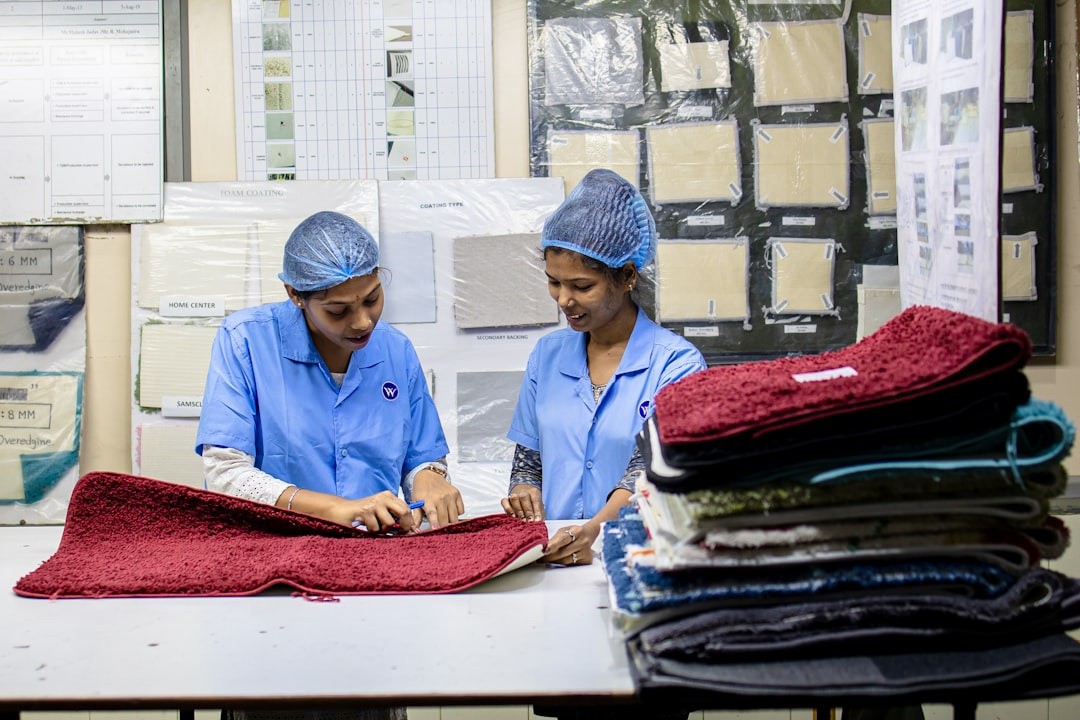
1. Are You a Manufacturer or a Trading Company?
Start with the basics.
Ask directly:
“Are you the manufacturer of this product, or are you a trading company?”
There is nothing inherently wrong with working with a trading company. In some cases, traders can offer better communication, broader product ranges, lower purchasing complexity, and access to several factories.
The problem begins when a company presents itself as a manufacturer when it is actually an intermediary.
You need to know who is actually producing your goods.
If the supplier claims to be a factory, consider asking for its business licence, factory address, production photos or videos, and whether an onsite visit or inspection can be arranged.
2. What Is Your MOQ?
MOQ means Minimum Order Quantity.
Never assume that the MOQ displayed online applies to your exact specifications.
Ask:
“What is your MOQ for this exact product and specification?”
Then go further.
Does the MOQ change if you require your own logo? Custom packaging? Different colours? Modified specifications?
A supplier might advertise an MOQ of 100 units but require 500 units once customization is introduced.
Clarify this before spending time negotiating everything else.
3. What Exactly Is Included in Your Quotation?
A price without clearly defined terms is almost meaningless.
Suppose one supplier quotes $8.50 and another quotes $9.20.
The first supplier is not necessarily cheaper.
Ask exactly what the quotation includes:
- Product specification and model
- Packaging
- Branding or customization
- Accessories
- Export packaging
- Applicable taxes
- Incoterm
- Delivery point
- Any additional charges
Most importantly, ask:
“Under which Incoterm is this price quoted?”
EXW, FOB, CIF, DAP and DDP represent very different cost and responsibility structures.
Compare quotations on equivalent terms.
4. Can You Confirm the Complete Product Specifications?
Never rely exclusively on product photos.
Before production, obtain written confirmation of the exact specifications.
Depending on the product, this may include dimensions, materials, voltage, frequency, capacity, colour, components, tolerances, performance requirements, packaging, labelling and applicable standards.
Ask:
“Can you confirm the complete specifications that will be used for production?”
The final specification should exist in writing.
If a disagreement occurs later, “we discussed it on WeChat” is a weak position compared with an approved specification sheet or purchase order.
5. Can You Provide a Sample?
For many products, approving a sample before mass production is one of the cheapest forms of risk reduction available.
Ask:
“Can you provide a production sample before I place the full order?”
Then clarify whether the sample will be identical to mass production.
This matters.
A supplier can produce an excellent sample manually and later use different materials, components, finishing, or processes during mass production.
Where appropriate, keep an approved sample as your reference sample for subsequent quality inspection.
6. What Is Your Production Lead Time?
Do not simply ask:
“How fast can you produce it?”
Ask something measurable:
“How many days from deposit/payment and final specification approval until the goods are ready for inspection?”
You should distinguish between:
Production lead time — how long manufacturing takes.
Shipping/transit time — how long transportation takes afterward.
These are not the same thing.
Also ask whether the lead time changes during peak production periods or around major Chinese holidays.
7. What Quality-Control Procedures Do You Use?
“Good quality” is not a quality-control system.
Ask the supplier:
“What quality-control procedures do you perform during and after production?”
Depending on the order, you may want to know whether they conduct incoming-material inspection, production-line checks, functional testing, final inspection or batch sampling.
For important orders, do not rely entirely on the supplier’s internal QC.
Consider arranging an independent pre-shipment inspection before releasing the final payment.
8. Which Certifications or Test Reports Can You Provide?
This question is particularly important for electrical products, machinery, electronics, toys, medical-related products and other regulated categories.
Ask:
“Which certifications and test reports are available for this exact model?”
Then verify whether the documents actually correspond to the product you intend to purchase.
A PDF certificate bearing a familiar logo is not automatically proof of compliance.
Check the product model, manufacturer, issuing body, standard, dates and intended destination market.
Your country’s import requirements matter—not simply whatever certificate the supplier happens to possess.
9. What Are Your Payment Terms?
Never discuss only the price.
Ask:
“What are your payment terms?”
For example:
- What percentage is required as a deposit?
- When is the balance due?
- Which payment methods are accepted?
- What company or bank account will receive the money?
- Can the balance be paid after inspection?
Be particularly cautious when payment instructions suddenly change.
If you negotiated with Company A but are unexpectedly asked to transfer money to an unrelated company or personal account, stop and verify the situation before paying.
10. What Happens If the Products Fail Inspection?
This question is frequently forgotten.
Ask it before you pay the deposit, not after defective products have been discovered.
“If the goods fail the agreed inspection criteria, what is your corrective-action policy?”
Possible solutions may include reworking defective goods, replacing units, reproducing the affected quantity or reaching another documented agreement.
The important point is to establish expectations before there is a dispute.
11. Can I Arrange an Independent Inspection?
This is one of the most revealing questions you can ask:
“Can I arrange an independent inspection at your factory before shipment?”
A legitimate supplier should generally understand why a commercial buyer wants to verify an order before shipment.
Resistance does not automatically prove fraud, but unexplained resistance deserves attention.
For significant orders, inspection should be treated as part of the procurement process rather than an emergency measure after problems appear.
12. What Is the Final Shipping Point?
“FOB China” is not sufficiently precise.
Ask:
“Which exact port or location does your quotation refer to?”
For example:
- FOB Shenzhen
- FOB Ningbo
- FOB Shanghai
- EXW Guangzhou
- FCA Yiwu
China is enormous. Inland transportation between the factory and departure point can materially affect your landed cost.
The exact named place should appear alongside the Incoterm.
The Question Behind All the Questions
Ultimately, you are trying to establish four things:
Who am I dealing with?
What exactly am I buying?
What will it really cost me?
What happens if something goes wrong?
If your supplier cannot give clear, consistent and documented answers to those questions, a cheap quotation should not reassure you.
It should make you more cautious.
Don’t Choose Suppliers on Price Alone
One of the most expensive mistakes new importers make is treating sourcing as a race to find the lowest unit price.
The cheapest supplier can become the most expensive supplier once you account for defective products, delays, incorrect specifications, unexpected freight costs, rejected goods, rework and lost customers.
A stronger sourcing process compares price, capability, specifications, reliability, compliance, quality control and total landed cost.
That is how you move from simply buying products from China to managing procurement professionally.
Need Help Verifying or Sourcing Suppliers in China?
Herogroupe Limited helps international businesses source products from China, identify and verify suppliers, compare quotations, coordinate procurement and quality inspections, and support international logistics.
If you have found a supplier but are unsure whether you should place the order, verification before payment is considerably cheaper than solving problems afterward.
Website: herogroupe.com
Email: contact@herogroupe.com
Helping businesses trade smarter with China.