Learn how shipping containers work, understand container types and dimensions, compare FCL and LCL shipping, and discover how to prepare your goods for international transportation.
When importing products from China, understanding container shipping is essential for controlling logistics costs and ensuring your goods arrive safely at their destination.
Whether you are importing machinery, construction materials, furniture, electronics, textiles, or consumer goods, choosing the right shipping arrangement can significantly influence your overall import costs.
However, many new importers make decisions based solely on the supplier’s quotation without understanding how container shipping actually works.
Questions frequently arise:
- What is the difference between a 20-foot and a 40-foot container?
- When should you choose FCL or LCL?
- How much cargo can a container accommodate?
- What happens between loading at the factory and arrival at the destination port?
- Who is responsible for arranging transportation and customs clearance?
- What additional costs should you anticipate?
In this guide, we explain the fundamentals of container shipping, with practical examples for businesses importing from China.
1. What Is Container Shipping?
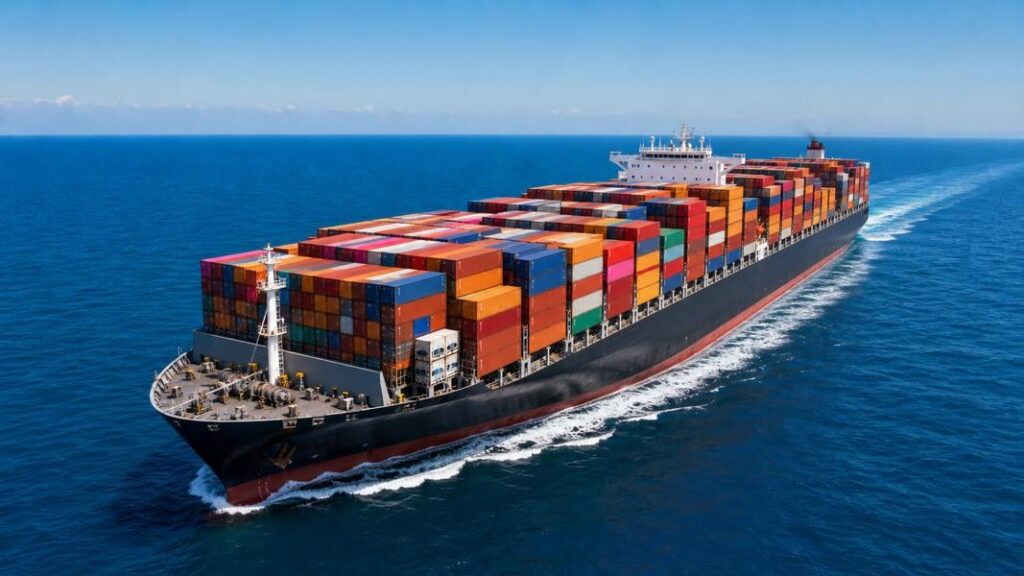
Container shipping is a transportation method in which goods are packed into standardized containers and transported by cargo vessels between international ports.
These containers are designed to protect merchandise during transportation and facilitate handling between different modes of transport, including trucks, trains, and ships.
One of the biggest advantages of container shipping is standardization.
Instead of handling individual packages throughout the journey, logistics companies can transport entire containers using specialized cranes, trucks, and terminal equipment.
For international importers, this offers several advantages:
- Better cargo protection.
- Easier handling and transportation.
- More efficient loading and unloading.
- Standardized container dimensions.
- Greater flexibility for different cargo types.
- More efficient transportation of large quantities.
Container shipping is particularly important for businesses importing commercial quantities of products from China.
2. Understanding the Different Types of Shipping Containers
Not all shipping containers are designed for the same purpose.
Selecting the appropriate container depends on the dimensions, weight, nature, and handling requirements of your merchandise.
Here are the most common types.
20-Foot General Purpose Container (20GP)
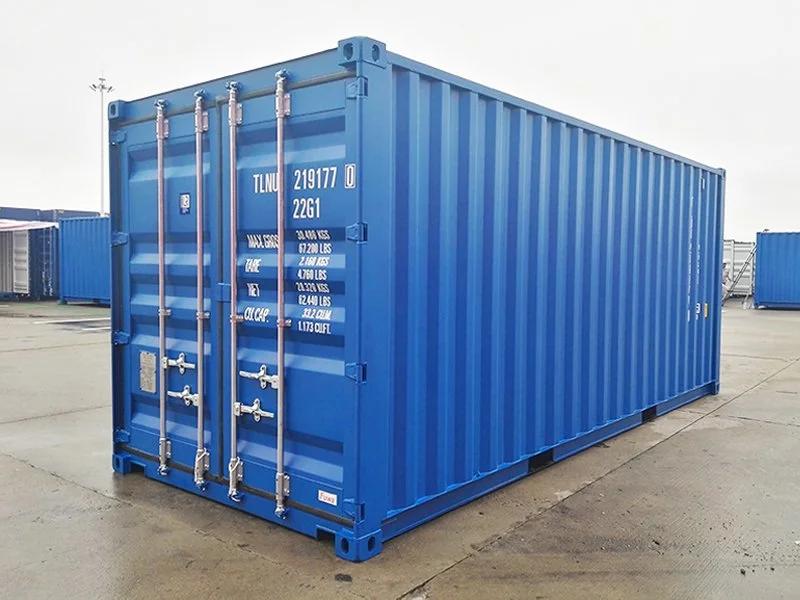
The 20-foot container is commonly used for smaller shipments and relatively heavy merchandise.
Approximate specifications:
| Specification | Approximate measurement |
|---|---|
| External length | 6.06 m |
| External width | 2.44 m |
| External height | 2.59 m |
| Internal volume | 33 CBM |
| Typical maximum payload | Around 28 tonnes |
Typical applications include:
- Construction materials.
- Machinery and industrial equipment.
- Metal products.
- Dense merchandise.
- Smaller commercial shipments.
The actual payload depends on the container’s specifications and applicable road and transport restrictions.
40-Foot General Purpose Container (40GP)
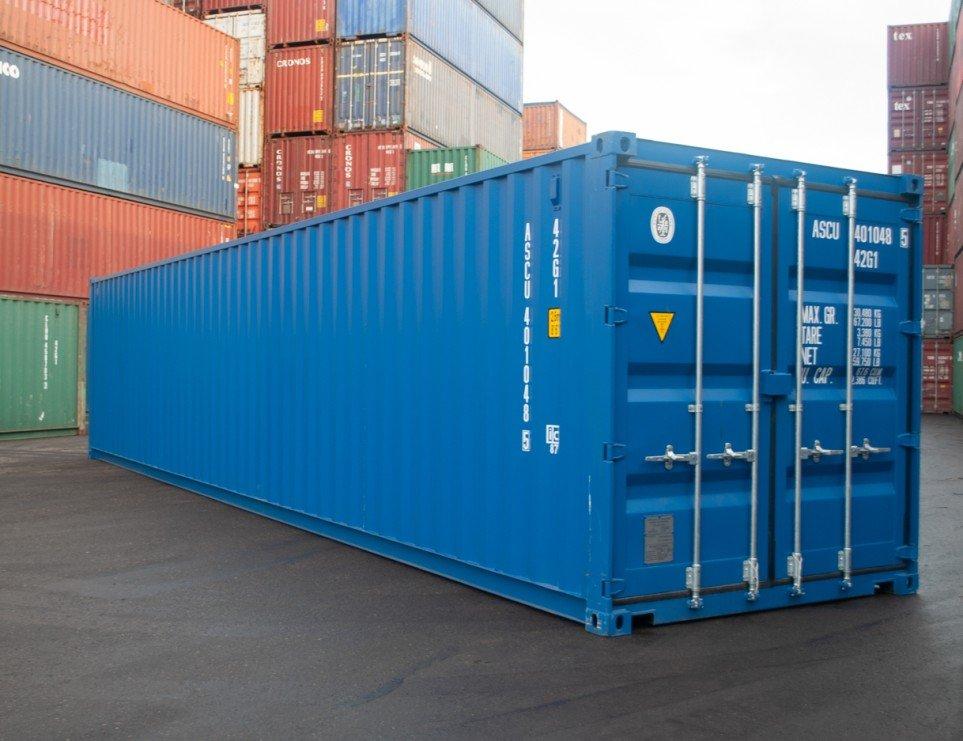
The 40-foot standard container offers approximately twice the internal volume of a 20-foot container.
| Specification | Approximate measurement |
|---|---|
| External length | 12.19 m |
| External width | 2.44 m |
| External height | 2.59 m |
| Internal volume | 67 CBM |
| Typical maximum payload | Around 26–28 tonnes |
It is commonly used for:
- Furniture.
- Household products.
- Consumer electronics.
- Textiles.
- Packaged merchandise.
- Larger commercial orders.
40-Foot High Cube Container (40HC)
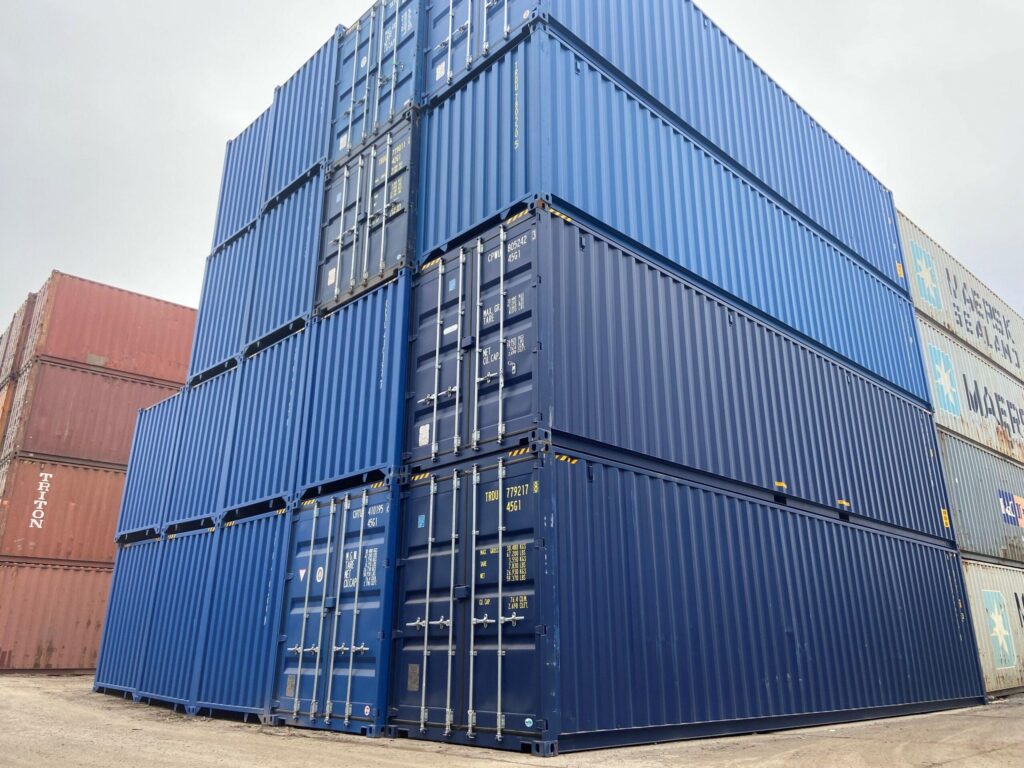
The 40HC container offers additional internal height compared with a standard 40-foot container.
| Specification | Approximate measurement |
|---|---|
| External length | 12.19 m |
| External width | 2.44 m |
| External height | 2.90 m |
| Internal volume | 76 CBM |
| Typical maximum payload | Around 26–28 tonnes |
It is particularly useful for bulky merchandise that requires additional vertical space.
Examples include furniture, lightweight industrial products, and packaged consumer goods.
Note: These measurements are approximate industry references. Actual internal dimensions, tare weight, payload, and usable capacity vary by manufacturer and container specification.
3. Specialized Shipping Containers
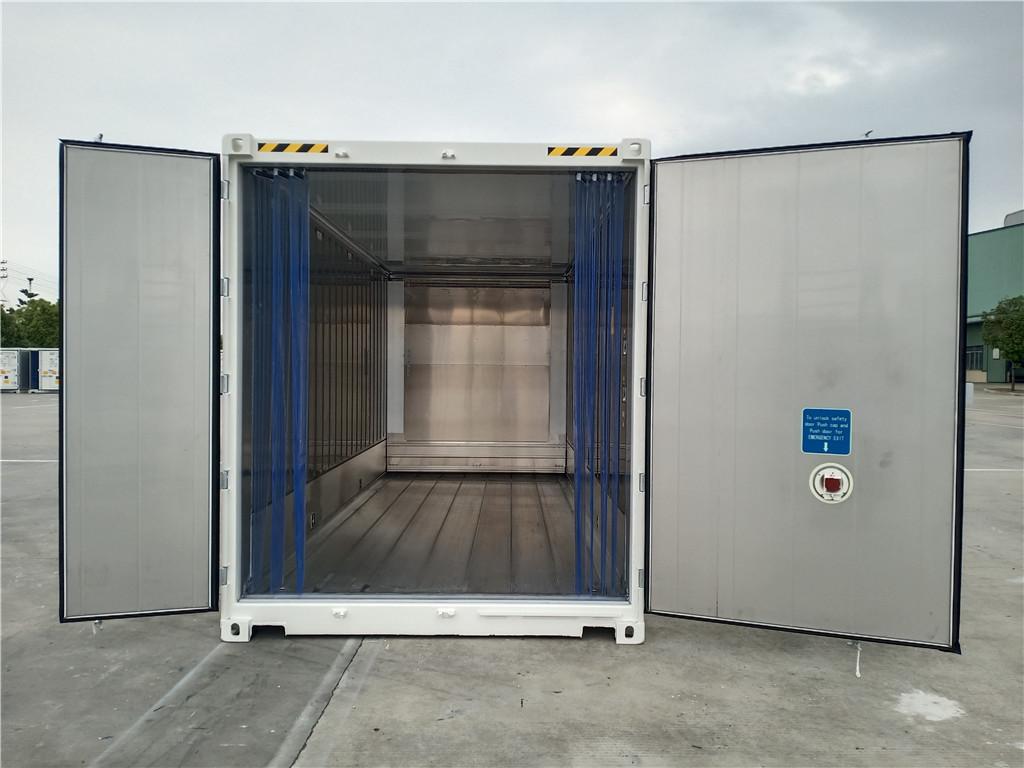
Reefer Containers
Refrigerated containers maintain controlled temperatures during transportation.
They are commonly used for:
- Frozen food.
- Fresh produce.
- Pharmaceutical products requiring controlled temperatures.
- Temperature-sensitive goods.
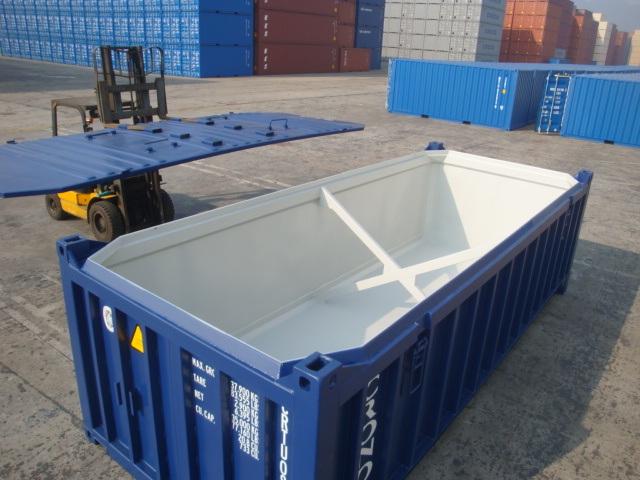
Open-Top Containers
These containers have a removable or convertible roof, allowing cargo to be loaded from above.
They are useful for:
- Tall machinery.
- Heavy industrial equipment.
- Oversized cargo.
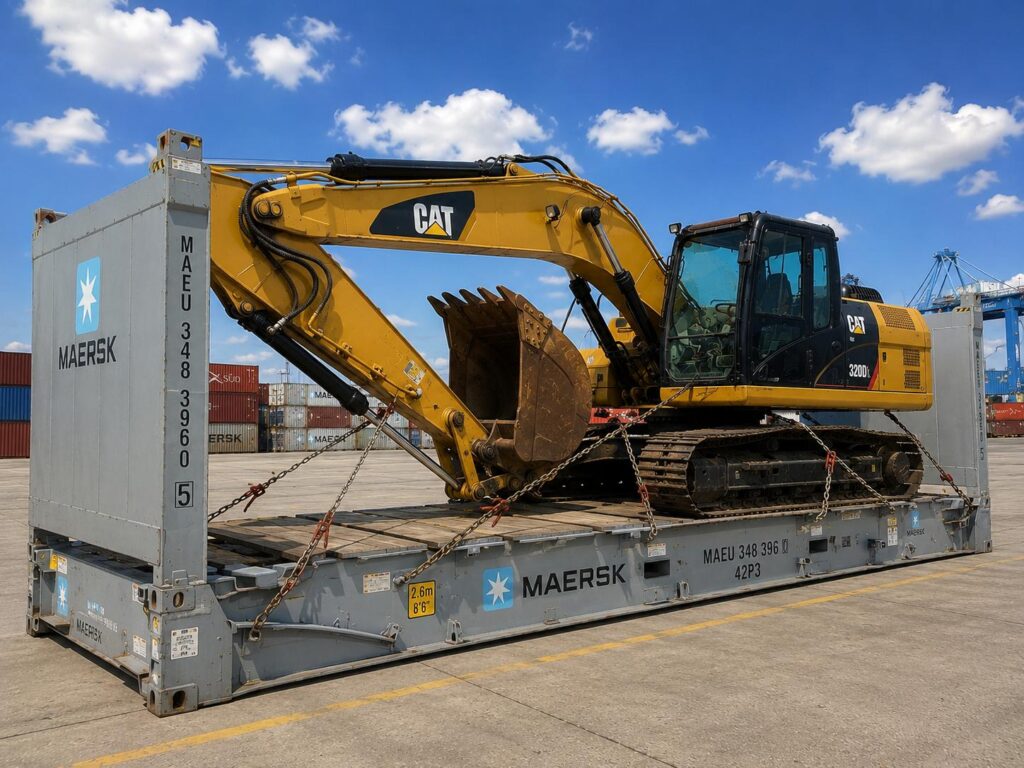
Flat Rack Containers
Flat racks have open sides and typically no fixed roof.
They are designed for oversized or unusually shaped cargo, including:
- Industrial machinery.
- Construction equipment.
- Large structural components.
Important: Specialized containers generally involve different availability, handling requirements, and freight charges. Always confirm suitability with your freight forwarder before placing an order.
4. Understanding FCL and LCL Shipping
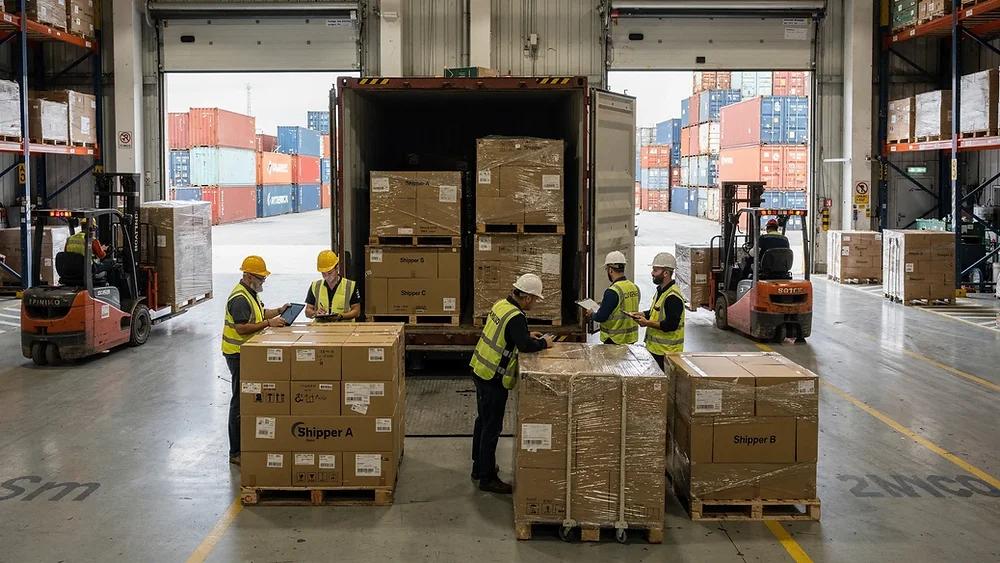
One of the most important decisions when importing from China is choosing between FCL and LCL.
FCL — Full Container Load
FCL means booking an entire container for your shipment.
You pay for the container as a unit rather than purchasing space according to your cargo volume.
Advantages:
- Greater control over container loading.
- Less handling of individual cargo.
- Suitable for large commercial orders.
- Reduced risk of mixing cargo with other shipments.
- Potentially lower shipping costs per unit for large volumes.
Disadvantages:
- Higher initial transportation commitment.
- You may pay for unused container capacity.
- Requires sufficient cargo to justify the booking.
LCL — Less than Container Load
LCL means sharing container space with other importers.
Your merchandise is consolidated with other shipments before being transported.
Advantages:
- Suitable for smaller shipments.
- No need to book an entire container.
- Useful when testing new products or suppliers.
- Allows smaller businesses to access ocean freight.
Disadvantages:
- Additional consolidation and deconsolidation handling.
- Destination handling charges can be significant.
- Potentially longer processing times.
- More complex coordination when multiple shipments are involved.
FCL vs LCL: Which Should You Choose?
| Criteria | FCL | LCL |
|---|---|---|
| Container booking | Entire container | Shared container |
| Best suited for | Larger shipments | Smaller shipments |
| Pricing | Per container | Usually per CBM or W/M |
| Cargo handling | Generally fewer handling stages | More consolidation handling |
| Initial commitment | Higher | Lower |
| Cost efficiency | Often better at larger volumes | Often better at smaller volumes |
There is no universal volume threshold at which FCL becomes cheaper.
The decision should be based on the total cost of each option, including origin and destination charges.
Our recommendation: Request both FCL and LCL quotations when your shipment volume makes the comparison worthwhile.
5. Understanding Container Capacity and CBM
CBM stands for Cubic Meter.
It measures the volume occupied by your merchandise.
The formula is:
CBM= L * W * H
All measurements must be expressed in meters.
Practical Example
Imagine you are importing 100 cartons from China.
Each carton measures:
- Length: 60 cm.
- Width: 40 cm.
- Height: 50 cm.
Convert the measurements into meters:
- 0.60 m.
- 0.40 m.
- 0.50 m.
Calculate the volume of one carton:
0.60 * 0.40 * 0.50 = 0.12
Each carton occupies 0.12 CBM.
For 100 cartons:
0.12* 100=12 CBM
Your shipment occupies approximately 12 CBM.
Why Is CBM Important?
CBM helps importers:
- Estimate LCL shipping costs.
- Determine whether FCL is worthwhile.
- Calculate container utilization.
- Compare freight quotations.
- Plan warehouse and loading requirements.
However, remember that actual container loading depends on carton dimensions, cargo weight, packaging, stacking restrictions, and the physical shape of the merchandise.
6. How Much Cargo Can Fit Inside a Shipping Container?
A container’s theoretical internal volume does not necessarily represent the amount of merchandise you can load.
For example:
| Container | Approximate internal volume |
|---|---|
| 20GP | 33 CBM |
| 40GP | 67 CBM |
| 40HC | 76 CBM |
These figures represent approximate internal volume, not guaranteed cargo capacity.
In practice, you may not be able to use every cubic meter.
Why?
- Cartons may not fit perfectly together.
- Some products cannot be stacked.
- Fragile products require additional protection.
- Irregularly shaped machinery occupies unused space.
- Pallets consume additional loading space.
- Weight restrictions may be reached before volume capacity.
A container can be full by volume but still have unused weight capacity, or reach its payload limit while considerable space remains.
This distinction is particularly important when importing machinery, metals, and construction materials.
7. How Does the Container Shipping Process Work?
Understanding the shipping process helps importers coordinate their suppliers, freight forwarders, and customs brokers.

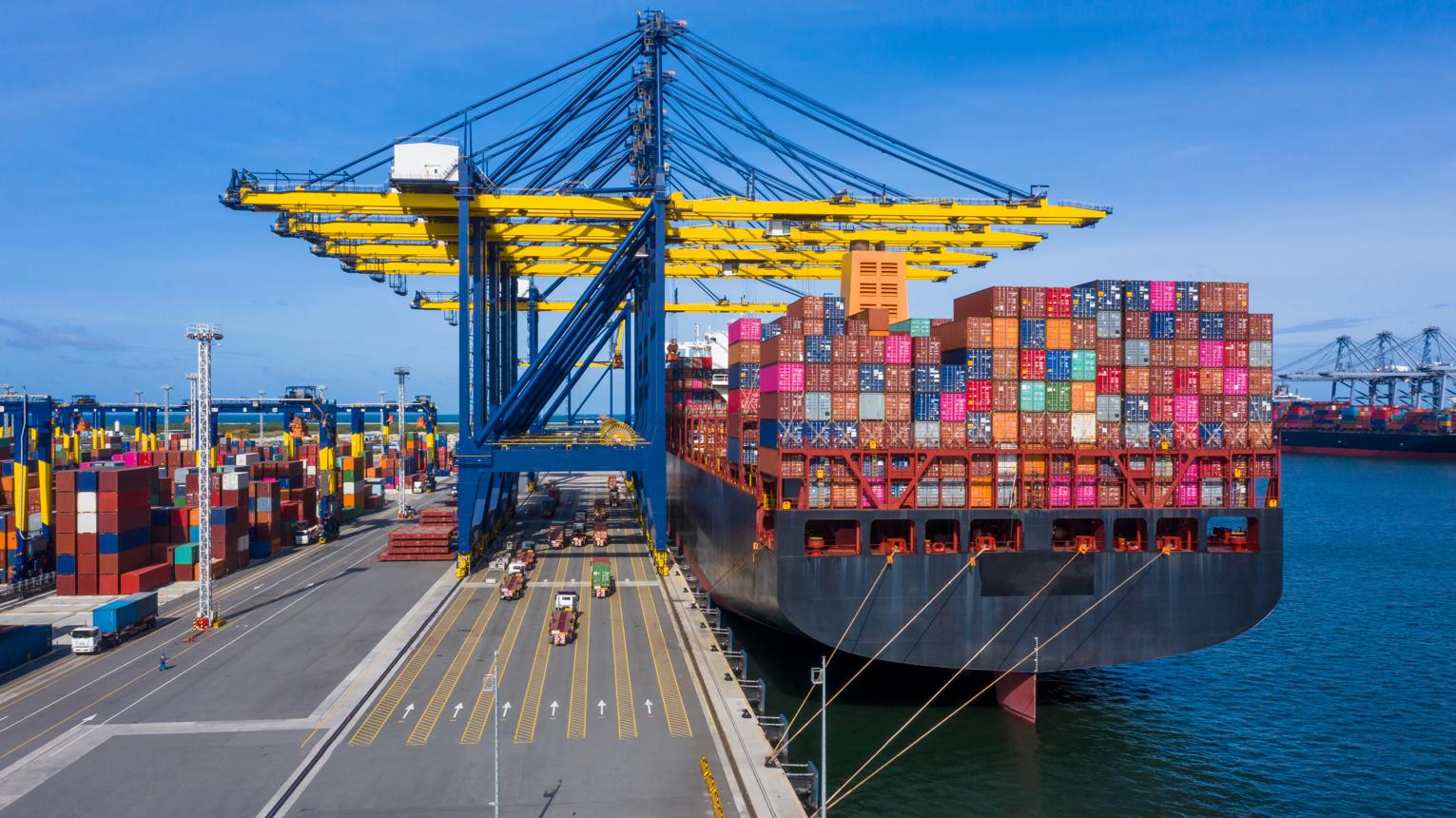
Here is a simplified overview of a typical export shipment from China.
Step 1: Supplier Preparation
The supplier completes production, packaging, and quality checks.
Before shipment, the buyer should verify:
- Product quantities.
- Product specifications.
- Packaging quality.
- Carton dimensions.
- Gross weight.
- Total CBM.
Step 2: Booking the Shipment
The importer or appointed freight forwarder arranges the transportation.
The booking generally identifies:
- Cargo details.
- Container type.
- Port of loading.
- Port of discharge.
- Estimated departure.
- Shipping line or service.
Step 3: Container Allocation and Cargo Loading
For FCL, the empty container is released for loading at the supplier’s factory or another designated location.
For LCL, the cargo is generally delivered to a consolidation warehouse.
The cargo is inspected for loading suitability and secured appropriately.
Step 4: Export Customs Clearance
The shipment undergoes the required export customs procedures in China.
The necessary export documentation must be prepared.
Step 5: Loading onto the Vessel
The container is transported to the port terminal and loaded onto the vessel.
The shipping line issues the relevant transport documentation, commonly a Bill of Lading.
Step 6: International Ocean Transportation
The vessel transports the container to the destination port.
Depending on the route, the shipment may travel directly or through one or more transshipment ports.
Step 7: Arrival at Destination
When the vessel arrives, the destination terminal processes the container.
The importer or appointed customs broker handles the required import clearance procedures.
Step 8: Cargo Release and Final Delivery
Once the applicable clearance and release requirements are completed, the cargo can be collected or delivered to the final destination.
For FCL, the container is generally transported to the designated unloading location.
For LCL, the cargo is deconsolidated and released separately.
8. What Is a Bill of Lading (B/L)?
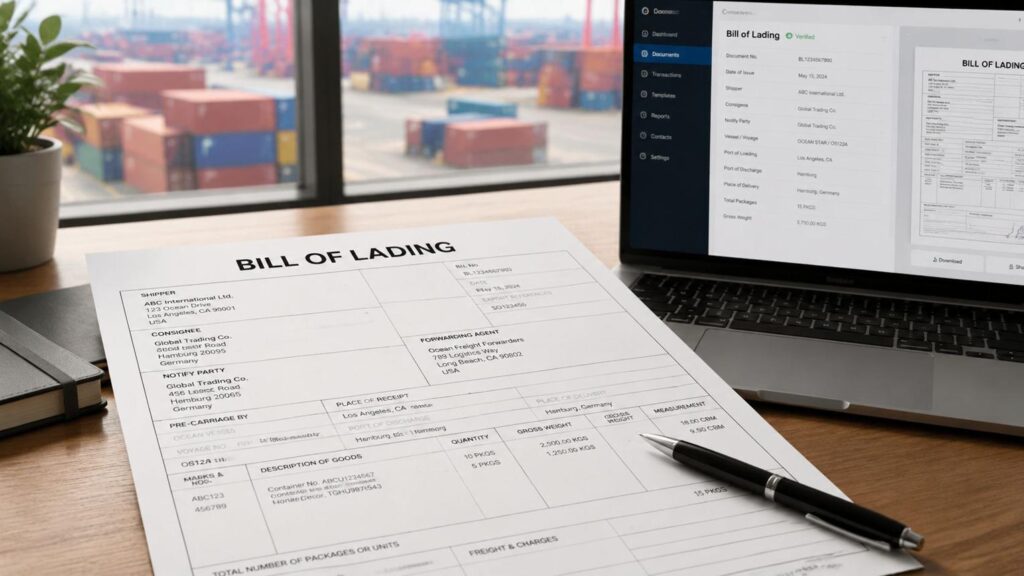
A Bill of Lading is an important document used in international maritime transportation.
It serves three principal functions:
- Evidence of the contract of carriage.
- Receipt of the goods by the carrier.
- A document of title when issued in negotiable form.
There are several types and arrangements.
Original Bill of Lading
A traditional negotiable document that may need to be presented or surrendered to obtain cargo release, depending on the arrangement.
Telex Release
An electronic release instruction issued after the relevant original Bill of Lading has been surrendered at origin.
Sea Waybill
A non-negotiable transport document that does not require presentation of an original negotiable Bill of Lading for cargo release.
Importers should confirm which document arrangement is being used before shipment.
Important: Do not confuse a commercial invoice, packing list, and Bill of Lading. Each serves a different purpose in international trade.
9. What Documents Are Required for Container Shipping?
International shipments require accurate documentation.
Depending on the product, destination, and transaction, the documents may include:
| Document | Main purpose |
|---|---|
| Commercial Invoice | Declares the transaction value and product details |
| Packing List | Describes packaging, quantities, weight, and dimensions |
| Bill of Lading | Provides evidence of maritime carriage |
| Certificate of Origin | Identifies the country of origin when required |
| Insurance Certificate | Provides evidence of cargo insurance |
| Export Declaration | Supports export customs procedures |
| Import Declaration | Supports import customs clearance |
| Product Certificates | Demonstrate applicable regulatory compliance |
Not every shipment requires every document.
Requirements depend on the product classification, country regulations, and shipping arrangement.
Always verify documentation requirements before dispatching your goods.
10. How Are Container Shipping Costs Calculated?
Container shipping costs depend on several factors.
For FCL, the main ocean freight charge is generally calculated per container.
For LCL, the freight is commonly calculated according to cargo volume or weight, depending on the tariff.
Additional costs may include:
- Origin handling charges.
- Export documentation fees.
- Container transportation.
- Terminal handling charges.
- Ocean freight.
- Cargo insurance.
- Destination handling charges.
- Customs clearance.
- Import duties and taxes.
- Final delivery.
Example: Shipping a 20GP Container
Suppose you receive the following hypothetical quotation:
| Expense | Amount |
|---|---|
| Ocean freight | $1,850 |
| Origin handling | $180 |
| Export documentation | $65 |
| Other origin charges | $90 |
| Total | $2,185 |
This is only an illustrative origin and ocean cost breakdown.
Destination charges, customs duties, taxes, and final delivery may be additional.
Never assume that the ocean freight quotation represents the complete landed cost.
11. What Is Container Stuffing and Unstuffing?
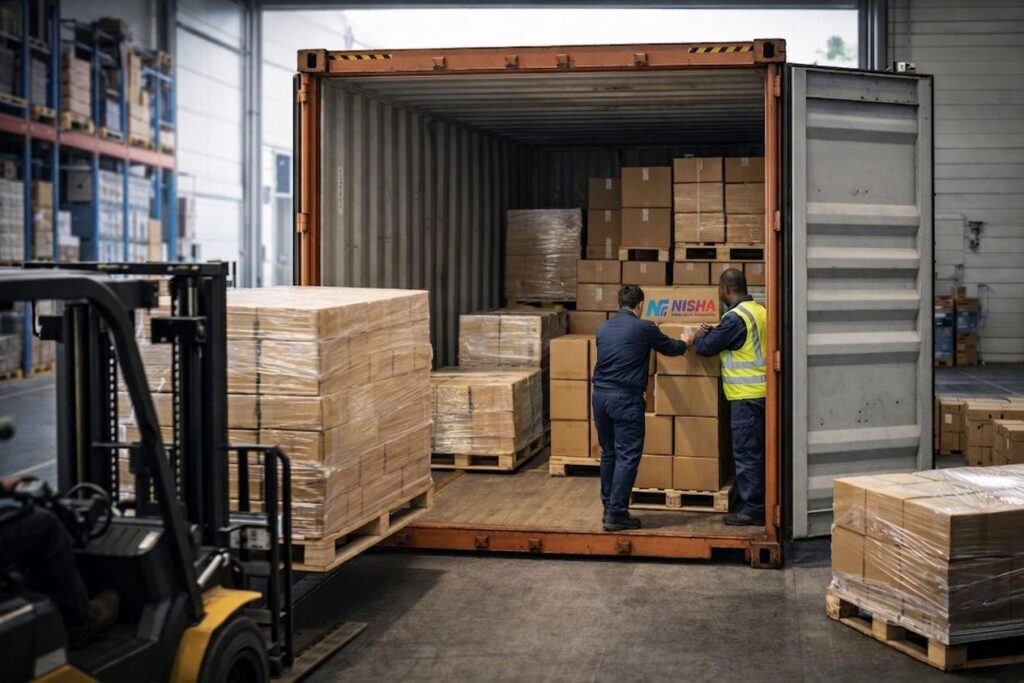
Container stuffing refers to the process of loading cargo into a shipping container.
Unstuffing refers to removing the cargo from the container.
Proper stuffing is essential because poorly loaded cargo can shift during transportation and become damaged.
Important considerations include:
- Weight distribution.
- Cargo securing.
- Proper stacking.
- Protection against moisture.
- Use of appropriate packaging materials.
- Compliance with container payload limits.
Heavy products should generally be positioned and distributed appropriately to avoid excessive localized loads.
Fragile goods should be protected against movement and impact.
For international shipments, proper cargo loading can reduce the risk of damage and commercial disputes.
12. What Is Container Sealing and Why Is It Important?
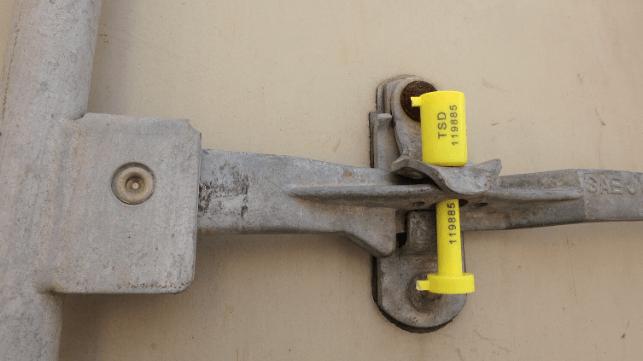
After loading, shipping containers are generally secured with a seal.
The seal is a security device used to indicate whether the container doors have been opened or tampered with after sealing.
Each seal has a unique identification number.
That number should be recorded in the relevant shipping documentation.
Why is container sealing important?
- Helps detect unauthorized access.
- Supports cargo security.
- Provides traceability.
- Helps investigate discrepancies.
- Supports shipping documentation and verification.
Importers should request the container and seal numbers when applicable and verify them against the shipping records.
A container seal is a security measure, not a guarantee that the contents are correct or undamaged.
This is why pre-shipment inspection remains important.
13. Common Container Shipping Mistakes to Avoid
Many importers encounter avoidable problems because they do not understand the logistics process.
Here are some frequent mistakes:
1. Choosing the wrong container size
Booking a container that is too large or too small can increase costs or complicate loading.
2. Ignoring cargo weight
A container may reach its payload limit before its volume is fully utilized.
3. Underestimating packaging volume
Poor packaging optimization can increase freight expenses.
4. Failing to inspect goods before shipment
Discovering defects after international transportation can be expensive.
5. Ignoring destination charges
The origin quotation does not necessarily include the costs payable at destination.
6. Incorrect shipping documentation
Errors in invoices, packing lists, or transport documents can delay clearance.
7. Not understanding Incoterms
Buyers must know who is responsible for each transportation stage.
8. Failing to monitor shipping schedules
Changes in vessel schedules and transshipment arrangements can affect delivery timelines.
9. Ignoring container sealing
Failing to record or verify seal information can complicate cargo security checks.
10. Focusing only on the freight rate
The lowest ocean freight quotation does not automatically represent the lowest total import cost.
14. How to Choose the Right Container for Your Products
The best container depends on your merchandise and shipping requirements.
| Product category | Possible container choice |
|---|---|
| Construction materials | 20GP or 40GP |
| Furniture | 40GP or 40HC |
| Household products | 20GP, 40GP or 40HC |
| Textiles | 40GP or 40HC |
| Heavy machinery | 20GP, 40GP or specialized equipment |
| Temperature-sensitive products | Reefer |
| Oversized industrial equipment | Open-top or flat rack |
These are general indications, not universal rules.
Before booking, confirm:
- Product dimensions.
- Total gross weight.
- Total cargo volume.
- Loading requirements.
- Container payload.
- Route and transport restrictions.
- Special handling requirements.
A freight forwarder can help determine the most appropriate equipment.
15. How Herogroupe Helps Importers Manage Shipping from China
At Herogroupe, we understand that importing successfully requires more than finding a supplier and negotiating a competitive price.
The entire procurement and logistics process must be properly coordinated.
Our services include:
- Product sourcing and procurement.
- Supplier identification and verification.
- Price negotiation.
- Quality control and pre-shipment inspection.
- Packaging and cargo verification.
- Shipping coordination.
- Freight quotation comparison.
- Communication with Chinese manufacturers and logistics partners.
Our presence on the ground in China allows us to coordinate directly with suppliers and logistics providers to help international buyers make informed decisions.
Whether you are importing a few cartons through LCL or arranging a full-container shipment, understanding your logistics costs and responsibilities is essential.
Our objective is to help buyers reduce avoidable procurement risks and improve the efficiency of their supply chains.
Conclusion: Understanding Container Shipping Is Essential for Profitable Importing
Container shipping is one of the foundations of international trade.
Understanding container types, dimensions, FCL and LCL arrangements, CBM calculations, documentation, and shipping procedures can help importers make better commercial decisions.
But remember: booking a container is only one part of the import process.
You must also ensure that:
- Your products meet the required specifications.
- Your packaging is suitable for international transportation.
- Your cargo measurements are accurate.
- Your documentation is complete.
- Your freight quotation is transparent.
- Your destination costs are properly anticipated.
At Herogroupe, we help international buyers navigate sourcing, procurement, quality control, and logistics coordination from China.
Source with confidence. Manage logistics intelligently. Import profitably.
Herogroupe — Your sourcing and procurement partner on the ground in China.
📧 Contact: contact@herogroupe.com
🌐 Website: https://www.herogroupe.com/