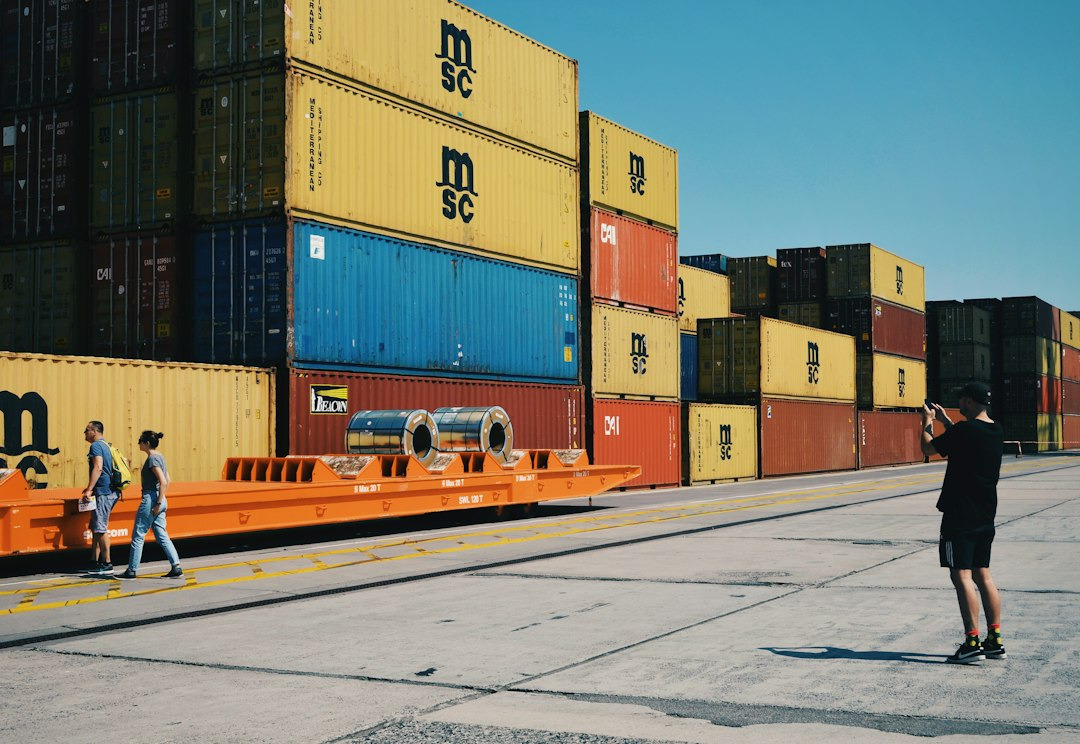
Understanding Container Shipping: FCL vs LCL, Container Sizes, Costs, and How to Ship from China
The complete guide to choosing the right container shipping method, avoiding hidden charges, and controlling your import costs.
Importing goods from China involves more than finding a reliable supplier and negotiating a competitive price.
Once your products are manufactured and ready for shipment, another important decision arises:
How should you transport your goods to their destination?
For many international importers, container shipping is one of the most practical and cost-effective ways to move merchandise across borders.
But container shipping is not as simple as booking a container and waiting for it to arrive.
You must understand several important concepts:
- What is the difference between FCL and LCL?
- What are the standard container sizes?
- How do shipping companies calculate freight charges?
- When should you choose a 20-foot or 40-foot container?
- What are CBM and chargeable volume?
- Which port charges should you expect?
- How can you avoid demurrage, detention, and unnecessary logistics expenses?
These questions are especially important for businesses importing from China to markets across Africa, Europe, the Americas, and other regions.
Choosing the wrong shipping arrangement can increase your landed cost, delay delivery, and reduce your profit margins.
In this guide, we explain how container shipping works, compare FCL and LCL, examine common container sizes, and provide practical strategies for making better shipping decisions.
1. What Is Container Shipping?
Container shipping is a method of transporting goods using standardized metal containers designed to move efficiently between ships, trucks, and trains.
These containers protect cargo during transportation and simplify handling between different transport modes.
Rather than loading individual cartons or products directly onto a vessel, goods are packed into containers that can be lifted and transferred using specialized equipment.
Containerization has become a foundation of modern international trade because it allows large quantities of merchandise to move through global supply chains efficiently.


Why is container shipping so widely used?
Container shipping offers several advantages:
Economies of scale: Large volumes of goods can be transported at a relatively low cost per unit.
Cargo protection: Containers reduce direct exposure to weather and handling during transit, although proper packaging remains essential.
Standardization: Standard container dimensions simplify international logistics.
Multimodal compatibility: Containers can move between ships, trucks, and rail networks without unpacking the cargo.
Global accessibility: Major ports around the world handle containerized shipments.
However, not every product is suitable for a standard dry container. Oversized machinery, temperature-sensitive products, and dangerous goods may require specialized equipment or handling.
2. What Are FCL and LCL Shipping?
When requesting ocean freight quotations, you will frequently encounter two terms:
FCL — Full Container Load
LCL — Less than Container Load
These are two common approaches to transporting containerized cargo.
Understanding the difference is essential because each has its own pricing structure, operational process, advantages, and limitations.
FCL: Full Container Load
FCL generally means that one shipper books an entire container for a shipment.
You do not necessarily need to fill the container completely.
Even if your cargo occupies only part of the available space, you may still book and pay for the entire container.
LCL: Less than Container Load
LCL means that your shipment shares container space with cargo from other shippers.
A freight consolidator combines multiple smaller shipments into one container for international transportation.
Each shipper generally pays according to the applicable chargeable volume or weight, subject to minimum charges and other fees.

A container booked for one shipment, even if not completely filled.

Several smaller shipments consolidated into a shared container.
3. FCL vs LCL: What Are the Main Differences?
| Criteria | FCL | LCL |
|---|---|---|
| Container space | Booked for one shipment | Shared among shipments |
| Pricing basis | Generally per container | Usually chargeable CBM or weight |
| Suitable cargo volume | Medium to large shipments | Smaller shipments |
| Cargo consolidation | Usually unnecessary | Required |
| Cargo handling | Generally fewer consolidation steps | More handling during consolidation |
| Transit process | Can be more direct | Includes consolidation and deconsolidation |
| Damage exposure | Generally fewer handling-related risks | Potentially greater handling exposure |
| Cost efficiency | Often better at higher volumes | Often better at lower volumes |
| Flexibility | Requires container-level booking | Allows smaller shipment quantities |
| Customs and destination fees | Container-related charges | May include separate LCL handling and release charges |
Neither option is automatically better.
The right choice depends on your cargo volume, weight, value, destination, delivery requirements, and the total quoted cost.
4. Understanding Standard Shipping Container Sizes
One of the first questions importers ask is:
Should I book a 20-foot or 40-foot container?
The answer depends on the dimensions, weight, and packaging of your products.
The most common container types for general merchandise are:
- 20-foot standard container (20GP)
- 40-foot standard container (40GP)
- 40-foot high-cube container (40HC or 40HQ)

| Specification | 20GP | 40GP | 40HC |
|---|---|---|---|
| External length | 6.06 m | 12.19 m | 12.19 m |
| External height | 2.59 m | 2.59 m | 2.90 m |
| Approx. internal volume | 33 CBM | 67 CBM | 76 CBM |
| Common cargo profile | Dense or smaller-volume cargo | Higher-volume cargo | Bulky cargo |
Approximate specifications for standard dry containers. Actual internal dimensions, usable capacity, payload, and door clearances vary by container model and operator.
20-foot standard container (20GP)
A 20-foot container is often suitable for relatively heavy or dense merchandise.
Examples include:
- Metal components
- Industrial equipment
- Hardware
- Certain construction materials
- Dense packaged products
Its smaller volume can be advantageous when cargo weight becomes the limiting factor.
40-foot standard container (40GP)
A 40-foot container provides approximately twice the internal volume of a 20-foot container.
It is often used for:
- Furniture
- Consumer goods
- Packaged electronics
- Clothing
- Household products
- Larger commercial orders
However, a 40-foot container does not necessarily offer twice the permissible payload of a 20-foot container.
40-foot high-cube container (40HC)
A 40HC container is approximately 30 centimeters taller than a standard 40-foot container.
This additional height provides more cubic capacity.
It is especially useful for:
- Lightweight, bulky products
- Furniture
- Foam products
- Textiles
- Large-volume packaged merchandise
The best container is not always the largest. It is the one that matches your cargo’s volume, weight, dimensions, and loading requirements.
5. What Is CBM in International Shipping?
CBM stands for Cubic Meter.
It measures the volume occupied by cargo.
In international shipping, CBM is especially important for determining the space your products require and calculating many LCL freight charges.
How to calculate CBM
The formula is:
<div class=”formula”>CBM=Length (m) × Width (m) × Height (m) </div>
Suppose one carton measures:
- Length: 60 cm
- Width: 40 cm
- Height: 50 cm
Convert these dimensions into meters:
<div class=”formula”>0.60 × 0.40 × 0.50=0.12 CBM </div>
If you have 100 identical cartons:
<div class=”formula”>100 × 0.12=12 CBM </div>
Your total theoretical carton volume is 12 CBM.
However, the space actually required in a container can be greater due to palletization, irregular shapes, loading restrictions, and unused spaces.
Interactive CBM calculator
6. How Is LCL Freight Calculated?
LCL shipping is commonly priced using a weight-or-measurement method, often called W/M.
Under a common W/M tariff structure:
- 1 CBM is compared with 1 metric ton (1,000 kg).
- The higher numerical quantity determines the chargeable revenue tons.
For example:
A shipment has:
- Volume: 5 CBM
- Gross weight: 2,000 kg
The weight equals 2 metric tons.
The chargeable quantity is therefore 5 revenue tons, based on volume.
Now consider:
- Volume: 3 CBM
- Gross weight: 5,000 kg
The weight equals 5 metric tons.
The chargeable quantity is therefore 5 revenue tons, based on weight.
The applicable ratio, minimum charge, rounding method, and additional fees depend on the freight provider and tariff.
Example of LCL freight cost
Suppose a freight forwarder quotes an illustrative base ocean freight rate of $85 per revenue ton.
For a shipment charged at 5 revenue tons:
<div class=”formula”>5 × 85=$425 </div>
The base freight would be $425.
However, this amount may exclude:
- Origin handling
- Documentation
- Consolidation charges
- Destination deconsolidation
- Customs clearance
- Delivery order charges
- Inland delivery
- Taxes and duties
A low LCL ocean freight rate does not necessarily mean a low total shipping cost.
7. When Should You Choose LCL Shipping?
LCL is generally worth considering when your shipment is too small to justify booking an entire container.
For example, imagine importing 4 CBM of electrical accessories from China.
Booking a complete 20-foot container may leave most of the available space unused.
An LCL shipment allows you to share container space and pay for the chargeable quantity of your cargo.
Advantages of LCL
Lower entry cost for small shipments
You can ship smaller quantities without paying for a full container.
Greater purchasing flexibility
Businesses can import smaller orders rather than committing to large inventories.
Useful for testing new products
Importers can test market demand before placing larger orders.
Suitable for multiple small suppliers
Goods may be consolidated into a shared shipment.
Disadvantages of LCL
Additional handling
Cargo is consolidated and deconsolidated, creating more handling points.
Potentially longer delivery times
Consolidation and release procedures can add time.
Higher cost per CBM at larger volumes
As shipment volume increases, FCL may become more economical.
Destination charges
LCL shipments can attract substantial handling and release charges.
LCL is particularly useful for small and medium-sized businesses, but it requires careful cost comparison.
8. When Should You Choose FCL Shipping?
FCL is often preferable when shipment volume is sufficiently large or when operational considerations justify an entire container.
For example, a business importing 25 CBM of furniture may find that a 20-foot container offers a competitive alternative to LCL.
Even if the container is not completely filled, the total FCL cost may be lower than paying LCL rates for 25 CBM.
Advantages of FCL
Potentially lower cost per unit
For larger volumes, the fixed container cost can be spread across more products.
Fewer consolidation handling stages
The shipment generally avoids the LCL process of combining and separating multiple shippers’ cargo.
Better shipment control
A dedicated container can simplify planning, loading, sealing, and cargo identification.
Suitable for larger orders
FCL is commonly used for commercial inventory, machinery, and bulk purchases.
Disadvantages of FCL
Higher total commitment for small shipments
You may pay for unused container capacity.
Container-level charges
Terminal handling, trucking, and equipment-related charges can be substantial.
Demurrage and detention exposure
Delays in collecting or returning the container can generate additional costs.
Loading constraints
The container must comply with payload, weight distribution, securing, and applicable road transport limits.
FCL is not always cheaper, but it often becomes increasingly competitive as cargo volume rises.
9. FCL vs LCL: At What Volume Does FCL Become Cheaper?
This is one of the most frequently asked questions in container shipping.
Some importers assume that LCL is always better below 15 CBM and FCL is always better above 15 CBM.
In reality, there is no universal CBM threshold.
The break-even point depends on:
- Origin port
- Destination port
- Container availability
- Freight rates
- LCL handling charges
- Destination charges
- Cargo weight
- Delivery requirements
- Shipping season
- Port congestion
Consider the following hypothetical comparison.
Assume:
- LCL total logistics cost: $110 per chargeable CBM
- FCL 20-foot total logistics cost: $1,900
- Equivalent service scope and destination assumptions
- Cargo charged by volume rather than weight
In this simplified example, FCL becomes cheaper at approximately:
<div class=”formula”>1900 / 110 ≈ 17.3 CBM </div>
But this is only a mathematical illustration.
The actual break-even point may be lower or higher depending on the shipment.
Always request comparable LCL and FCL quotations before making the final decision.
10. Understanding the Difference Between 20GP, 40GP, and 40HC
Choosing the right container requires understanding both cargo volume and cargo weight.
A common mistake is selecting a container based only on CBM.
Consider two shipments:
Shipment A
- 25 CBM
- 23,000 kg
- Dense industrial components
Shipment B
- 60 CBM
- 8,000 kg
- Lightweight furniture
Shipment A may be better suited to a 20GP container, subject to its actual payload and road limits.
Shipment B may require a 40GP or 40HC container because volume, rather than weight, is the main constraint.
Volume is not the only limitation
You must also consider:
- Maximum gross container weight
- Container tare weight
- Permitted cargo payload
- Weight distribution
- Pallet dimensions
- Door opening dimensions
- Loading and unloading equipment
- Local road weight restrictions
A container with sufficient cubic capacity may still be unsuitable if the cargo exceeds its permissible payload or cannot be safely loaded.
11. How Container Shipping Works: Step by Step
Understanding the shipping process helps importers plan their orders and avoid unexpected delays.
Step 1: Goods preparation
The supplier completes production, packaging, labeling, and shipment preparation.
Step 2: Cargo inspection
The buyer or inspection partner verifies the products, quantities, packaging, and quality before dispatch.
Step 3: Freight booking
The responsible party books the appropriate FCL or LCL service, depending on the agreed commercial terms.
Step 4: Collection and inland transportation
Goods are collected from the factory and transported to the port, container freight station, or consolidation warehouse.
Step 5: Export customs clearance
The relevant party arranges the required export declarations and documentation.
Step 6: Container loading
FCL cargo is loaded into the booked container. LCL cargo is consolidated with other shipments.
Step 7: Ocean transportation
The container travels to the destination port, potentially through one or more transshipment ports.
Step 8: Arrival and import clearance
The shipment is processed through destination terminal procedures and import customs formalities.
Step 9: Cargo release and final delivery
The goods are released and delivered to the buyer or the designated receiving location.
Every stage requires coordination between suppliers, freight forwarders, shipping lines, customs brokers, terminals, and importers.
A delay at one stage can affect the entire delivery schedule.
12. What Documents Are Required for Container Shipping?
Documentation requirements vary depending on the product, country of origin, destination, and applicable regulations.
However, common documents include:
Commercial invoice
Identifies the seller, buyer, goods, prices, currency, and commercial transaction details.
Packing list
Provides shipment information such as carton quantities, product descriptions, gross and net weights, and dimensions.
Bill of lading
A transport document issued in connection with maritime carriage that may serve as evidence of the contract of carriage, receipt of goods, and, depending on its form, a document of title.
Certificate of origin
May be required for customs purposes, preferential tariff treatment, or buyer requirements.
Insurance certificate
Relevant where cargo insurance has been arranged or is contractually required.
Product-specific documents
Certain goods may require:
- Conformity certificates
- Inspection certificates
- Test reports
- Import permits
- Safety documentation
- Dangerous goods declarations
- Other regulatory approvals
Importers should verify the requirements applicable to their specific products and destination country before shipment.
13. Understanding Container Shipping Costs
Container shipping costs extend far beyond the ocean freight rate.
A complete logistics budget should account for several categories.
Origin charges
These may include:
- Factory collection
- Inland trucking
- Export customs clearance
- Documentation
- Container loading
- Terminal handling
- Consolidation services for LCL
Ocean freight
This is the main international transportation charge.
It may be quoted per container for FCL or by chargeable quantity for LCL.
Insurance
Cargo insurance is an important risk-management consideration.
Neither a container nor a freight booking automatically guarantees protection against every possible loss.
Destination charges
These may include:
- Terminal handling
- Delivery order fees
- Container or cargo release
- Customs brokerage
- Storage
- Deconsolidation for LCL
- Inland transportation
Duties and taxes
Import duties, VAT, and other taxes depend on the destination country’s customs rules and the classification and valuation of the goods.
The true cost of importing is not simply the ocean freight rate. It is the complete cost of getting your products to their intended destination.
14. What Are Demurrage and Detention?
Demurrage and detention are two of the most misunderstood container shipping charges.
They can become expensive when containers are not collected, unloaded, or returned within the permitted free-time periods.
Demurrage
Demurrage generally refers to charges associated with keeping a carrier’s container within a terminal beyond the applicable free-time allowance.
Detention
Detention generally refers to charges for keeping a carrier’s container outside the terminal beyond the permitted free-time period.
Exact definitions and charging structures can vary by carrier, terminal, and jurisdiction.
Example
Suppose a shipping line provides an illustrative five-day free-time allowance.
The container is released late because the importer has not completed the required procedures.
Additional charges may accumulate.
The longer the delay, the higher the potential expense.
How to reduce these costs
- Prepare customs documentation before arrival
- Confirm the estimated vessel arrival date
- Coordinate with your customs broker
- Arrange transport capacity in advance
- Understand the carrier’s free-time policy
- Monitor container release and return deadlines
- Resolve documentation discrepancies early
Demurrage and detention are often avoidable through better planning and communication.
15. How Long Does Container Shipping from China Take?
Ocean freight transit time depends on several factors:
- Origin and destination ports
- Shipping route
- Direct service or transshipment
- Vessel schedules
- Port congestion
- Customs procedures
- Weather disruptions
- Inland delivery requirements
For example, shipping from a major Chinese port to West Africa may involve transshipment at an intermediate port.
This can increase the total journey time compared with a direct service.
Importers should distinguish between:
Port-to-port transit time: The estimated time between the departure and arrival ports.
Door-to-door lead time: The total time required from collection at origin to delivery at the final destination.
These are not the same.
Door-to-door lead time may include factory collection, consolidation, customs clearance, terminal handling, and inland transportation.
For business planning, the total door-to-door lead time is often more useful than the advertised ocean transit time alone.
16. Container Shipping from China to Africa: What Importers Should Know
China is a major sourcing market for African businesses importing machinery, construction materials, electronics, spare parts, household goods, textiles, and industrial equipment.
However, shipping to African markets requires careful destination-specific planning.
For example, importers shipping to Côte d’Ivoire may use the Port of Abidjan as a maritime gateway.
But freight arrangements, customs procedures, terminal charges, and delivery requirements vary depending on the shipment.
Key considerations for African importers
Destination charges
Request a detailed estimate of charges payable at the destination port.
Customs classification
Verify the correct HS codes and applicable import requirements.
Conformity requirements
Certain products may require specific conformity assessments or certificates.
Shipping documentation
Ensure the invoice, packing list, bill of lading, and other documents are consistent.
Local customs broker
Work with a qualified broker familiar with the destination’s procedures.
Final delivery
Confirm trucking costs, unloading arrangements, and the delivery location.
Transit uncertainty
Allow for potential delays caused by transshipment, port congestion, and clearance procedures.
These considerations are particularly important when calculating landed costs and setting resale prices.
17. The Role of Incoterms in Container Shipping
When negotiating with Chinese suppliers, you may receive quotations under different Incoterms.
Common examples include:
- EXW — Ex Works
- FCA — Free Carrier
- FOB — Free On Board
- CFR — Cost and Freight
- CIF — Cost, Insurance and Freight
- CPT — Carriage Paid To
- CIP — Carriage and Insurance Paid To
- DAP — Delivered at Place
- DDP — Delivered Duty Paid
These terms allocate transportation responsibilities, costs, and risks differently.
For example:
EXW Guangzhou
The buyer generally assumes responsibility from the agreed collection point, including export arrangements under the standard rule.
FCA Guangzhou
The seller delivers to the agreed carrier or handover point and handles export clearance.
FOB Shenzhen
The seller delivers the goods on board the vessel at Shenzhen.
CIF Abidjan
The seller arranges and pays for ocean freight and minimum required insurance to Abidjan, while risk generally transfers when the goods are loaded on board the vessel at origin.
Important for containerized cargo
Although FOB and CIF are commonly used in container shipping quotations, they are designed for sea and inland waterway transport where delivery occurs on board the vessel.
For goods handed over to a carrier at a container terminal before vessel loading, FCA or CIP may be more appropriate, depending on the commercial arrangement.
The correct Incoterm should reflect the actual delivery process.
18. Common Container Shipping Mistakes Importers Should Avoid
Mistake 1: Choosing LCL based only on the ocean freight rate
A low base freight rate can be offset by high origin and destination handling charges.
Mistake 2: Booking the wrong container size
A container must accommodate both the cargo volume and its weight safely.
Mistake 3: Ignoring destination charges
Importers should request a detailed estimate of local charges before shipping.
Mistake 4: Underestimating shipment volume
Incorrect carton dimensions, palletization, or packaging changes can affect the required capacity and freight cost.
Mistake 5: Forgetting demurrage and detention
Delays in container collection or return can create substantial additional expenses.
Mistake 6: Failing to inspect goods before shipment
Once the cargo leaves China, correcting quality problems may become significantly more difficult and expensive.
Mistake 7: Confusing port-to-port transit with door-to-door delivery
The total delivery process can take longer than the ocean voyage itself.
Mistake 8: Ignoring cargo insurance
Shipping lines’ liability is not a substitute for appropriately arranged cargo insurance.
Mistake 9: Selecting an Incoterm without understanding its obligations
EXW, FCA, FOB, CIF, and DDP can produce very different cost and risk outcomes.
Mistake 10: Failing to compare FCL and LCL quotations
The most cost-effective solution may change as your shipment volume increases.
19. How to Reduce Container Shipping Costs
Reducing logistics costs does not always mean choosing the cheapest freight quotation.
It means improving the overall efficiency of the shipment.
Optimize packaging
Reduce unnecessary carton dimensions without compromising product protection.
Consolidate purchases
Where practical, combine products from multiple suppliers into fewer shipments.
Compare FCL and LCL
Request both options when your shipment volume is near a potential break-even point.
Plan purchases early
Avoid last-minute shipping decisions that reduce your available options.
Negotiate freight terms
Compare quotations from reliable freight forwarders and confirm exactly what is included.
Verify cargo measurements
Accurate weight and volume data reduce pricing discrepancies.
Prepare customs documents in advance
Proper documentation can help avoid clearance delays and unnecessary storage costs.
Coordinate inspections before dispatch
Quality control before shipment can prevent expensive disputes after arrival.
Efficient container shipping begins long before the goods reach the port.
20. How Herogroupe Helps Importers Coordinate Container Shipping from China
At Herogroupe, we understand that international sourcing involves more than identifying manufacturers and negotiating product prices.
The real challenge is coordinating the entire procurement process so that goods are purchased correctly, inspected, prepared, and shipped according to the buyer’s requirements.
As a China-based sourcing and procurement partner, Herogroupe supports international buyers through:
- Supplier identification and verification
- Product sourcing and quotation comparison
- Price and commercial-term negotiation
- Procurement coordination
- Product and packaging inspections
- Communication with Chinese manufacturers
- Coordination with freight forwarders and logistics partners
When helping buyers prepare shipments, we encourage them to examine several important questions:
What is the total cargo volume in CBM?
What is the gross weight of the shipment?
Is FCL or LCL more economical?
Which container size is suitable?
Are the goods properly packaged and ready for export?
What are the estimated origin and destination charges?
Which shipping terms have been agreed with the supplier?
What is the estimated total landed cost?
These questions help importers make better purchasing and logistics decisions.
Our objective is to provide practical on-the-ground support in China, improve supplier coordination, and help buyers reduce avoidable sourcing and shipping risks.
21. Container Shipping Checklist for Importers
Before booking your shipment, review the following checklist.
0/12 completed
If you cannot answer these questions confidently, request clarification before confirming the booking.
Conclusion: Understanding Container Shipping Is Essential for Profitable Importing
Container shipping plays a central role in global trade and remains an important transportation method for businesses sourcing products from China.
But choosing between FCL and LCL is only one part of the decision.
Importers must also understand container dimensions, CBM calculations, freight pricing, cargo weight, customs requirements, destination charges, insurance, and delivery timelines.
LCL can provide flexibility and cost efficiency for smaller shipments.
FCL can offer better economics and operational control for larger cargo volumes.
The right option depends on your actual shipment characteristics and the complete logistics cost.
Above all, successful importers do not make shipping decisions based solely on the lowest advertised freight rate.
They evaluate the entire supply chain.
Because in international trade, the goal is not simply to ship your goods cheaply. It is to deliver them safely, efficiently, and at a cost that protects your business margins.
At Herogroupe, we help international buyers navigate supplier verification, sourcing, procurement, quality control, and logistics coordination from China.
Source with confidence. Ship with a strategy.
Herogroupe — Your sourcing and procurement partner on the ground in China.
Contact: contact@herogroupe.com Website: www.herogroupe.com